Team of the Week Football: Live, Data-First Picks for Fans
A Team of the Week (TOTW) is a single-matchday best XI selected after each round of fixtures to recognize the top-performing players across a competition. Selections typically appear within 24–48 hours of the final whistle, with Monday being the standard check-in day for weekend fixtures.
Where to find live and official picks:
- Premier League: Alan Shearer’s TOTW pieces on the official Premier League site
- BBC Sport: Troy Deeney’s weekly selections with tactical rationale
- MLS: Team of the Matchday with full XI, bench, coach, and match highlights
- Betsyscore: Live scores, AI prediction probabilities, and minute-by-minute momentum reads across 200+ competitions
Table of Contents
- How is the team of the week football chosen?
- Which stats actually drive TOTW selections?
- How can you predict the next best XI of the week?
- What tools and templates help you build your own TOTW?
- A worked example: building a TOTW from one matchday
- How should bettors and fantasy players use TOTW picks?
- Where can you follow official and fan-based TOTW picks?
- Key Takeaways
- Why blending statistics and expert context produces better picks
- Betsyscore makes live TOTW tracking straightforward
- FAQ
How is the team of the week football chosen?
Three distinct selector types drive weekly football selections, and each brings a different lens to the same matchday data.
Former professionals such as Alan Shearer and Troy Deeney evaluate players on match-winning contributions and tactical impact, not raw output alone. Shearer’s Premier League TOTW pieces single out standout performers with short rationales that blend statistics with context. Deeney, writing for BBC Sport, frequently cites composure under pressure, positional discipline, and leadership when justifying picks — qualities that do not always show up in a boxscore.
Media panels aggregate multiple expert opinions, which tends to smooth out individual bias. The trade-off is that consensus picks can miss the genuinely surprising performance that a single sharp selector would catch.
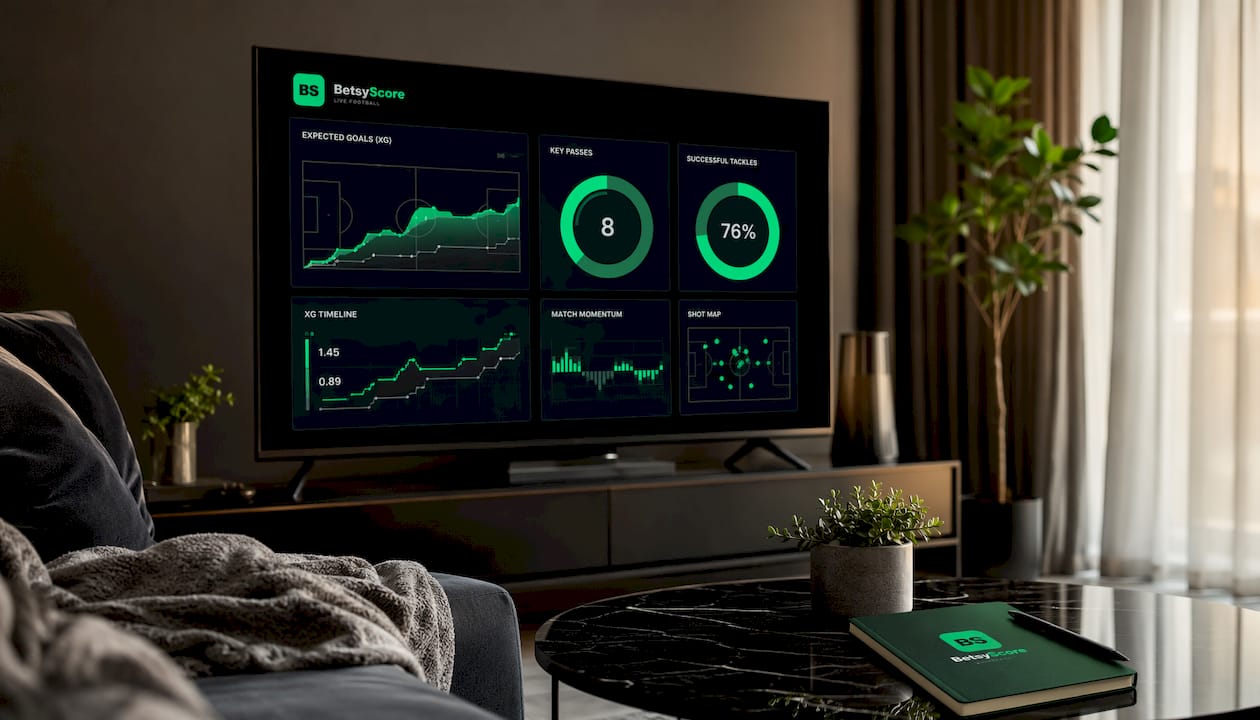
Automated algorithms process xG, key passes, successful tackles, and saves at scale. They are fast and consistent but cannot account for a player stepping into an unfamiliar position and excelling, or for the significance of a goal in a derby context.
| Selector type | Primary inputs | Strength | Limitation |
|---|---|---|---|
| Former professional | Match stats + tactical read | Intangibles, context | Personal bias |
| Media panel | Aggregated expert votes | Balanced view | Can miss outliers |
| Algorithm | xG, key passes, saves, tackles | Speed, consistency | No contextual judgment |
Pundit-led TOTWs are intentionally provocative — selectors sometimes pick players for redemption arcs or leadership rather than raw output, specifically to spark debate. That is a feature, not a flaw: it drives engagement and forces fans to think critically about what “performance” actually means.
Pro Tip: When a pundit pick surprises you, check whether the selector mentioned a positional change or a game-state factor. Those intangibles often explain the choice better than the stat line.
Which stats actually drive TOTW selections?
Six metrics appear most consistently across selector rationales and algorithm outputs.
- xG (expected goals): Measures shot quality, not just shot volume. A forward with 0.8 xG from two shots outperforms one with 0.3 xG from six.
- xA (expected assists): Quantifies the quality of chances created. Useful for midfielders whose final-ball contribution is not reflected in assists.
- Key passes: Any pass that leads directly to a shot. High counts signal creative involvement even without a goal or assist.
- Successful tackles: Separates defensive activity from defensive effectiveness. Volume without success rate is noise.
- Clearances and blocks: Relevant for center-backs in high-pressure matches; context matters (a team that defended 20 set pieces will inflate this number).
- Expected saves (xSave): Compares a goalkeeper’s actual saves against the difficulty of shots faced. A keeper who stops a 0.7 xG chance is doing something statistically significant.
Combining metrics with context is where the real signal lives. A forward with high xG in a match-winning performance against a top-four side carries far more weight than the same number in a routine win over a relegation candidate. Reading live match statistics in real time lets you apply that context as the match unfolds.
Pro Tip: Prioritize impact metrics (xG, goal involvement, xSave) over volume metrics (touches, passes) when comparing candidates for the same position. A midfielder with 110 touches and zero key passes is busy, not influential.
How can you predict the next best XI of the week?
A structured three-phase workflow gives you the best chance of forecasting weekly football highlights before official selections drop.
- Pre-match: Check confirmed lineups, injury reports, and recent form for both sides. Note any positional changes — a midfielder deployed as a winger, for example, often outperforms expectations and catches selector attention.
- Pre-match: Assess matchup difficulty. A clean sheet against a top-six attack is weighted differently than one against a bottom-half side.
- Live match: Track momentum events in real time: goals, key saves, red cards, and xG spikes. Betsyscore’s live tracker shows minute-by-minute momentum shifts and xG accumulation as they happen.
- Live match: Watch for role changes mid-game. A substitute who scores a winner in the 85th minute often earns a TOTW spot regardless of their overall stat line.
- Post-match (0–48 hours): Prioritize high-impact outcomes: match-winning goals, penalty saves, clean sheets in difficult fixtures. Cross-check against the known tendencies of named selectors.
- Post-match: Accumulate at least three to five indicators before committing to a pick. A single strong metric is not enough — selector context, match significance, and position fit all need to align.
- Use AI prediction outputs as probability signals, not certainties. They reflect statistical likelihood, not guaranteed outcomes.
- Treat your predictions as informed opinions. Variance is real, and even the most data-supported pick can be overlooked by a pundit who values a different intangible.
Pro Tip: Build a shortlist of two to three candidates per position before kickoff using form and lineup data. Narrowing the field early means you only need to confirm or eliminate during the match, not start from scratch.
What tools and templates help you build your own TOTW?
The right combination of tools covers every phase of the workflow without requiring multiple browser tabs.
| Tool / Feature | What it provides | Best phase |
|---|---|---|
| Live lineups | Confirmed starters, formation, position changes | Pre-match |
| Live xG feed | Shot quality accumulation, minute by minute | In-match |
| Post-match boxscore | Final stats: key passes, tackles, saves | Post-match |
| Pundit roundups | Selector rationale, intangibles, context | Post-match |
| Betsyscore Live | Momentum reads, live xG, AI probabilities | All phases |
For each player you are evaluating, apply this four-item checklist:
- Impact stat: Does at least one high-weight metric (xG, xSave, goal involvement) stand out?
- Match context: Was the performance in a significant fixture or against quality opposition?
- Selector fit: Does the player’s profile match what named selectors have historically rewarded?
- Risk filter: Are there any disqualifying factors (early substitution, low-difficulty opponent, positional mismatch)?
Pro Tip: Pre-fill two to three high-probability candidates per position before kickoff using post-match stats from the previous gameweek. It cuts your post-match analysis time significantly.
A worked example: building a TOTW from one matchday
MLS Team of the Matchday posts typically include a formation diagram, bench listing, and short highlights that map directly to the four-item checklist above. Here is how that process looks applied to a sample matchday:
- Goalkeeper: Kept a clean sheet against a top-five attack; xSave above 0.6 on two high-quality stops. Confirmed by the impact stat and match context filters.
- Center-back: Scored from a set piece and completed 94% of passes in a hostile away fixture. The goal adds goal-involvement weight that pure defensive metrics would miss.
- Full-back: Deployed as an inverted winger by the manager mid-match; contributed a key pass and a successful tackle in the same half. Positional change is the selector-fit signal here.
- Midfielder: Zero goals or assists, but 4 key passes and 3 successful tackles in a 1-0 win. Volume metrics look modest; impact metrics tell a different story.
- Forward: 1.1 xG, one goal, match-winning contribution in a derby. All four checklist items confirmed.
A named selector reviewing this matchday might bypass the midfielder entirely and choose a player who scored a late equalizer for a struggling side — citing leadership and composure under pressure rather than the key-pass count. That is the intangible layer that pundit selections consistently add, and it is why cross-referencing data with selector tendencies produces better predictions than either approach alone.
How should bettors and fantasy players use TOTW picks?
TOTW picks are a useful starting point for both betting and fantasy decisions, but they carry specific risks that require active management.
- Accumulator risk: Combining multiple TOTW-based selections into a single accumulator multiplies variance. Experts advise treating accumulators as higher-risk and sizing stakes accordingly.
- Rotation and fatigue: A player selected for TOTW this week may be rested or rotated the following gameweek, especially in congested fixture schedules.
- Recency bias: A standout performance can inflate a player’s perceived form. Confirm with at least three to five gameweeks of data before making a significant fantasy or betting commitment.
Best practices for responsible use:
- Diversify: spread selections across positions and competitions rather than concentrating on a single league’s TOTW.
- Size stakes to confidence level. A pick supported by five aligned indicators warrants more weight than one supported by two.
- Use TOTW as a source of ideas, not a definitive signal. Cross-reference with football results prediction tools before committing.
For fantasy leagues, TOTW announcements can move transfer and captaincy thinking quickly. Confirm a player’s next fixture difficulty and lineup status before acting on a TOTW-driven captaincy call.
Pro Tip: Treat any single TOTW pick as one data point in a larger decision. Accumulate evidence across multiple sources before placing a bet or making a captaincy call.
Where can you follow official and fan-based TOTW picks?
| Platform | What it offers | Speed |
|---|---|---|
| Premier League official site | Alan Shearer’s TOTW with rationale | Within 48 hours |
| BBC Sport | Troy Deeney’s weekly selections | Within 48 hours |
| MLS official site | Full XI, bench, coach, highlights | Within 24 hours |
| Canadian Premier League | Gatorade Team of the Week by position | Weekly |
| Betsyscore | Live scores, AI probabilities, momentum reads | Real time |
For a single-screen workflow, the most efficient combination is: confirmed lineups from the official league hub, live xG from Betsyscore’s live tracker, and a pundit roundup from BBC Sport or the Premier League site post-match. That three-source stack covers pre-match context, in-play data, and post-match editorial judgment without redundancy.
Social channels from official league accounts and verified pundit profiles deliver the fastest initial reactions, though depth of analysis follows later on dedicated editorial pages. For fans who also engage with gamified football experiences, sports games on Xbox increasingly incorporate real-world TOTW data into Dream XI and squad-building modes.
Key Takeaways
TOTW selections combine named-selector judgment with live statistical data, and fans who track both layers consistently produce more accurate predictions than those relying on either alone.
| Point | Details |
|---|---|
| Publication timing | Official TOTWs appear within 24–48 hours of the final whistle; check Monday for weekend fixtures. |
| Selector intent | Pundit picks include intangibles like leadership and composure, not just raw stats. |
| Priority metrics | Weight impact metrics (xG, xSave, goal involvement) over volume metrics (touches, passes). |
| Prediction workflow | Accumulate three to five aligned indicators before committing to a TOTW pick. |
| Betsyscore tools | Betsyscore’s live tracker and AI predictions provide real-time xG, momentum reads, and probability signals for every phase of TOTW tracking. |
Why blending statistics and expert context produces better picks
The most persistent mistake in TOTW prediction is treating statistics and pundit judgment as competing methods. They are not. A high xG total tells you a forward was in the right positions; it does not tell you whether that performance came in a hostile away fixture, after a positional change, or in a match that effectively ended a title race. Those details are what named selectors like Shearer and Deeney add, and they are precisely what algorithms cannot weight without human input.
The practical implication is straightforward: use live data to build your shortlist, then apply selector context to rank it. Betsyscore’s AI prediction outputs and minute-by-minute momentum reads give you the statistical layer in real time. The editorial layer — which player’s performance carried the most narrative weight this week — comes from cross-referencing with pundit selections after the final whistle. Neither layer alone is sufficient. Together, they produce a more defensible, more accurate weekly XI than either approach in isolation.
Betsyscore makes live TOTW tracking straightforward
Real-time TOTW tracking requires data that updates as the match progresses, not after the fact. Betsyscore delivers live scores refreshing every few seconds, AI win-probability percentages built from expected goals, recent form, and head-to-head records, plus a momentum read that shows which side is on top minute by minute.
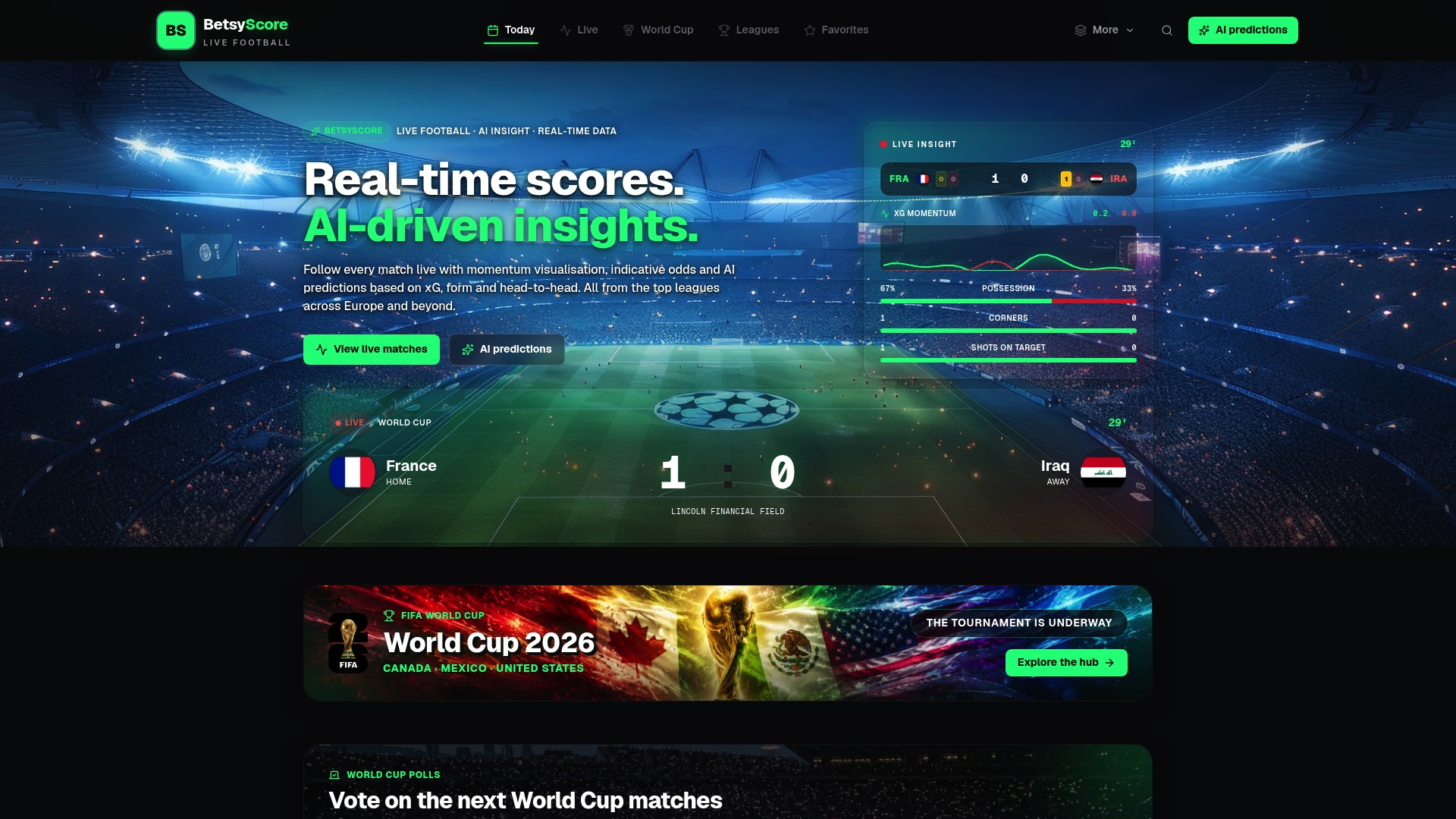
Coverage spans the FIFA World Cup 2026, the Premier League, La Liga, Bundesliga, Serie A, the Champions League, and more than 200 competitions worldwide. The Dream XI tool lets fans build and share their own weekly XI using live data, while the AI predictions page tracks probability outputs across every covered competition. For fans who want to follow the live match tracker from kickoff to final whistle, Betsyscore provides the xG feed, lineup confirmations, and momentum data the four-item checklist above depends on. Check the live tracker before your next matchday and see how the data lines up with your own TOTW predictions.
FAQ
What is a Team of the Week in football?
A Team of the Week is a best XI selected after each matchday to recognize the top-performing players across a competition. Official selections typically appear within 24–48 hours of the final whistle.
Who selects the Team of the Week?
Selections come from former professionals such as Alan Shearer and Troy Deeney, media panels, and automated algorithms, each weighing statistics and contextual factors differently.
Which stats matter most for TOTW selection?
xG, expected assists, key passes, successful tackles, and expected saves carry the most weight. Impact metrics consistently outrank volume metrics like total touches or pass count.
Can Betsyscore help me predict the weekly best XI?
Betsyscore’s live tracker and AI predictions provide real-time xG accumulation, momentum reads, and win-probability outputs that support every phase of the TOTW prediction workflow.
How does TOTW affect fantasy football decisions?
TOTW announcements can shift captaincy and transfer thinking quickly, but fans should confirm a player’s next fixture difficulty and confirmed lineup status before acting on a TOTW-driven pick.