Champions League Live Lineup Importance for Fans
Champions League live lineup importance is defined by one fact: the starting XI reveals a coach’s tactical plan before a single ball is kicked. Official team sheets drop approximately 60 minutes before kickoff, giving fans, analysts, and bettors a critical window to react. That window is short, and the fans who know how to read it gain a real edge. Understanding lineup significance goes far beyond knowing who plays. It tells you how a team plans to press, defend, or control possession before the referee blows the whistle.
1. Why Champions League live lineup importance starts with tactical reading
Treating lineups as tactical blueprints rather than static name lists reveals how coaches plan to negate specific opponent threats. The biggest mistake fans make is scanning for familiar names and stopping there. A lineup read at that surface level misses the most useful information entirely.
Positional structure tells the real story. A defensive midfielder deployed in a double pivot signals a team prioritizing ball security and compactness. A wide forward shifted inside to a narrow role suggests the coach wants central overloads rather than wide width. These are not minor details. They are the tactical intentions of the match, written in plain sight.
- Formation shape: A 4-3-3 with a high defensive line signals pressing intent. A 5-4-1 signals a low block and counter-attack focus.
- Positional anomalies: A center back starting in an advanced midfield role signals set-piece targeting or a specific man-marking assignment.
- Unorthodox role assignments: Positional structure and unorthodox roles, such as a defensive midfielder in a double pivot, predict tactics more accurately than the base formation number alone.
- Fitness signals: A key striker dropped to the bench despite no announced injury often signals a precautionary rest or a fitness concern the club has not publicized.
Pro Tip: Cross-reference the lineup with the team’s last three results. If a manager who normally presses high suddenly fields two defensive midfielders, expect a conservative approach regardless of what the formation number suggests.
2. Why lineup announcement timing matters more than most fans realize
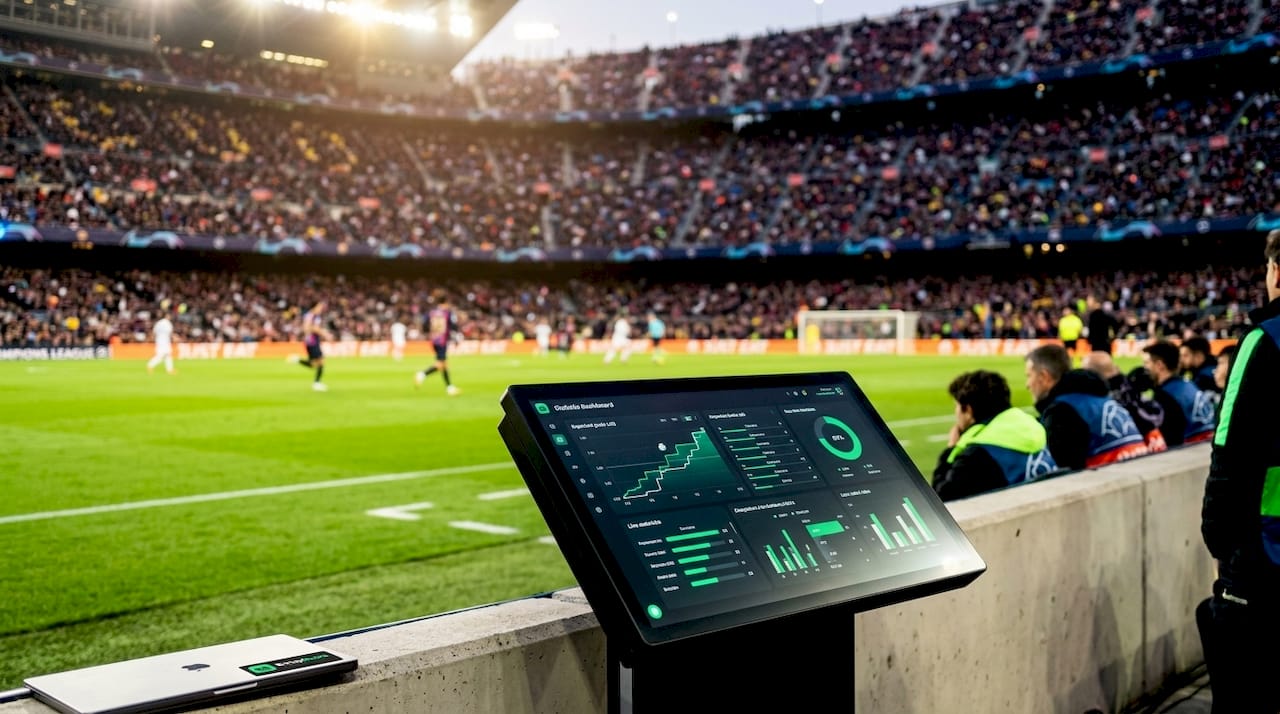
Official lineups are released approximately one hour before kickoff, and that single hour is where the most actionable information lives. Fans who wait until kickoff to check the team news have already missed the window.
The sequence of events in that hour follows a predictable pattern:
- Lineup drops: Official team sheets are published by UEFA and club channels simultaneously.
- Markets react: Betting odds move sharply on confirmed lineup data, shifting from pre-game estimates to lineup-adjusted probabilities within minutes.
- Overcorrection occurs: Market reactions to lineup announcements often overcorrect, creating short windows of betting value before odds stabilize at accurate levels.
- Fantasy decisions lock: Most fantasy football platforms lock rosters close to kickoff, making the lineup window the last chance to swap players based on confirmed starting roles.
- Fan discussion peaks: Social media debate about tactical choices reaches its highest volume in the 45 minutes between lineup release and kickoff.
Fans who follow official sources rather than rumor accounts react faster and with more accurate information. Leaked lineups circulate on social media before the official release, but they carry real risk. A single incorrect name can lead to a poor fantasy swap or a misinformed bet.
Pro Tip: Set a notification for official club and UEFA social accounts rather than relying on aggregator accounts. The official release is always the most reliable source, and it often arrives before third-party sites update.
3. How bench composition reveals late-game strategy
The bench is not a backup plan. It is a statement of intent. Extra attackers on the bench signal aggressive late-game tactics, while a defensive-heavy bench signals a conservative approach designed to protect a lead or absorb pressure.
Reading the bench alongside the starting XI gives a complete picture of how a manager expects the match to unfold. A team that starts cautiously but loads the bench with forwards is planning to chase the game if needed. A team that starts with attacking intent but carries three center backs on the bench is prepared to shift to a back five to protect a lead.
- Attacker-heavy bench: Signals the manager expects to need goals and is prepared to sacrifice defensive structure late.
- Defensive-heavy bench: Signals the manager prioritizes not losing, particularly in away legs of knockout ties.
- Specialist substitutes: A set-piece specialist or a high-press forward on the bench signals specific tactical triggers the manager plans to deploy.
- Youth or fringe players: Their presence on the bench often confirms the manager considers the match already decided or is managing squad depth carefully.
Fantasy football managers improve decisions by using bench composition to judge which players are likely to earn full minutes and which face early substitution. A striker starting but surrounded by attacking bench options faces a higher rotation risk than one starting in a squad with limited attacking depth.
4. How live lineup analysis deepens fan engagement
Fans who understand lineup implications enjoy richer engagement and better community discussions around matches. Lineup analysis transforms passive viewing into active participation. A fan who spots a tactical anomaly before kickoff watches the match with a specific question in mind, which makes every relevant moment more meaningful.
The social dimension of lineup analysis has grown considerably. When a manager makes a surprising selection, the discussion it generates on social media often rivals post-match reaction in volume and depth. Fans who can articulate why a selection is surprising, and what it signals, contribute more to those conversations and get more from them.
“Lineup reveals spark social media debates and deeper tactical conversations that connect fans to the game at a level that pure scoreline watching never achieves. The fan who reads the lineup is watching a different match than the fan who does not.”
Understanding Champions League performance data alongside live lineups gives fans the context to evaluate whether a manager’s selection makes sense given recent form, head-to-head history, and player statistics. That combination produces genuinely informed opinions rather than reactive takes.
5. Comparing lineup-based tactical insights across Champions League matches
Lineup-based tactical insights differ considerably by team and opponent, affecting expected possession style and risk profile. The same formation number can represent entirely different tactical intentions depending on the personnel filling each role.
The table below illustrates how lineup features translate into different tactical profiles across match contexts.
| Lineup feature | Tactical signal | Match impact |
|---|---|---|
| High defensive line with pressing forwards | Aggressive press, high block | Opponent forced into long balls; high turnover rate in advanced areas |
| Double pivot in midfield | Possession control, defensive cover | Slower tempo, fewer transitions, reduced opponent counter-attack opportunities |
| Inverted wingers on both sides | Central overloads, shooting from distance | Wide areas left open; fullbacks push high to compensate |
| Single striker with two attacking midfielders | Fluid front three, positional rotation | Difficult to man-mark; creates numerical advantages in pockets |
| Back three with wing-backs | Defensive solidity plus wide width | Compact defensively; wing-backs provide the only width in attack |
Managers often rotate squads to manage fatigue, and identifying rotation trends helps anticipate whether a team will play conservatively or aggressively. A heavily rotated lineup in a group stage match signals the manager prioritizes the upcoming league fixture. A full-strength lineup in the same context signals the manager needs points and is not managing load.
Avoiding common prediction errors starts with recognizing that lineup rotation is not random. It follows patterns tied to fixture congestion, opposition strength, and competition stage. Fans who track these patterns over a season develop a reliable read on how a manager values each match.
6. Using fitness and rotation signals in lineup reading
Fitness management reflected in lineups indicates a team’s risk tolerance for a given match. A manager who rests a key midfielder in a comfortable group stage position is signaling confidence. The same rest in a tight knockout tie signals a fitness concern the club has not announced publicly.
Rotation patterns across a season create a readable map of squad management. Teams competing in four competitions simultaneously rotate more aggressively than teams focused on one or two. Tracking which players consistently start in Champions League matches versus domestic league fixtures reveals the manager’s hierarchy of priorities.
The starting XI also reflects injury recovery timelines that clubs rarely communicate fully. A player returning from a minor knock who starts on the bench rather than the XI is likely not yet at full fitness, even if the club has cleared them to play. That distinction matters for fantasy decisions and for predicting how much influence that player will have on the match.
AI-powered match predictions incorporate lineup data alongside expected goals, recent form, and head-to-head records to produce win-probability estimates that update as confirmed team news arrives. Fans who combine their own lineup reading with AI-generated probability shifts get a more complete picture than either source provides alone.
Key takeaways
Champions League live lineups are tactical blueprints that reveal a coach’s game plan, player fitness status, and substitution strategy before kickoff, giving informed fans a measurable advantage in analysis, fantasy decisions, and match engagement.
| Point | Details |
|---|---|
| Lineups drop 60 minutes before kickoff | That window is the most actionable pre-match period for fans, bettors, and fantasy managers. |
| Positional structure predicts tactics | Unorthodox role assignments reveal game plans more accurately than the base formation number. |
| Bench composition signals intent | An attacker-heavy bench signals a team prepared to chase; a defensive bench signals a team protecting a result. |
| Market odds overcorrect on lineup news | Short windows of betting value appear before odds stabilize after the official release. |
| Lineup reading deepens fan engagement | Fans who analyze lineups watch with specific tactical questions, making every match more meaningful. |
Why lineup reading is the skill every Champions League fan should develop
I have watched hundreds of Champions League matches over the years, and the single habit that changed how I experience the game was reading the lineup before kickoff rather than after. The first time I noticed a manager deploy a defensive midfielder in an unfamiliar advanced role, I spent the first half watching for exactly what that player was being asked to do. The match became a puzzle I was actively solving rather than a spectacle I was passively watching.
The fan culture around tactical analysis has shifted considerably. Lineup reveals now generate genuine debate, not just name recognition. Fans who engage at that level get more from every match, regardless of the result. A 0-0 draw watched with lineup context is a completely different experience from the same match watched without it.
My honest advice is to build the habit of checking live lineup updates from official sources in that 60-minute window before kickoff. Pair the lineup with recent form data and head-to-head records. Then watch the match with those tactical questions in mind. The depth of enjoyment that follows is not marginal. It is a fundamentally different relationship with the game.
— Aria
Betsyscore brings live lineups and AI predictions together
Betsyscore publishes Champions League live lineups as soon as official team sheets are released, giving fans the full starting XI and bench composition in real time. The platform pairs that lineup data with AI-powered win-probability estimates built from expected goals, recent form, and head-to-head records.
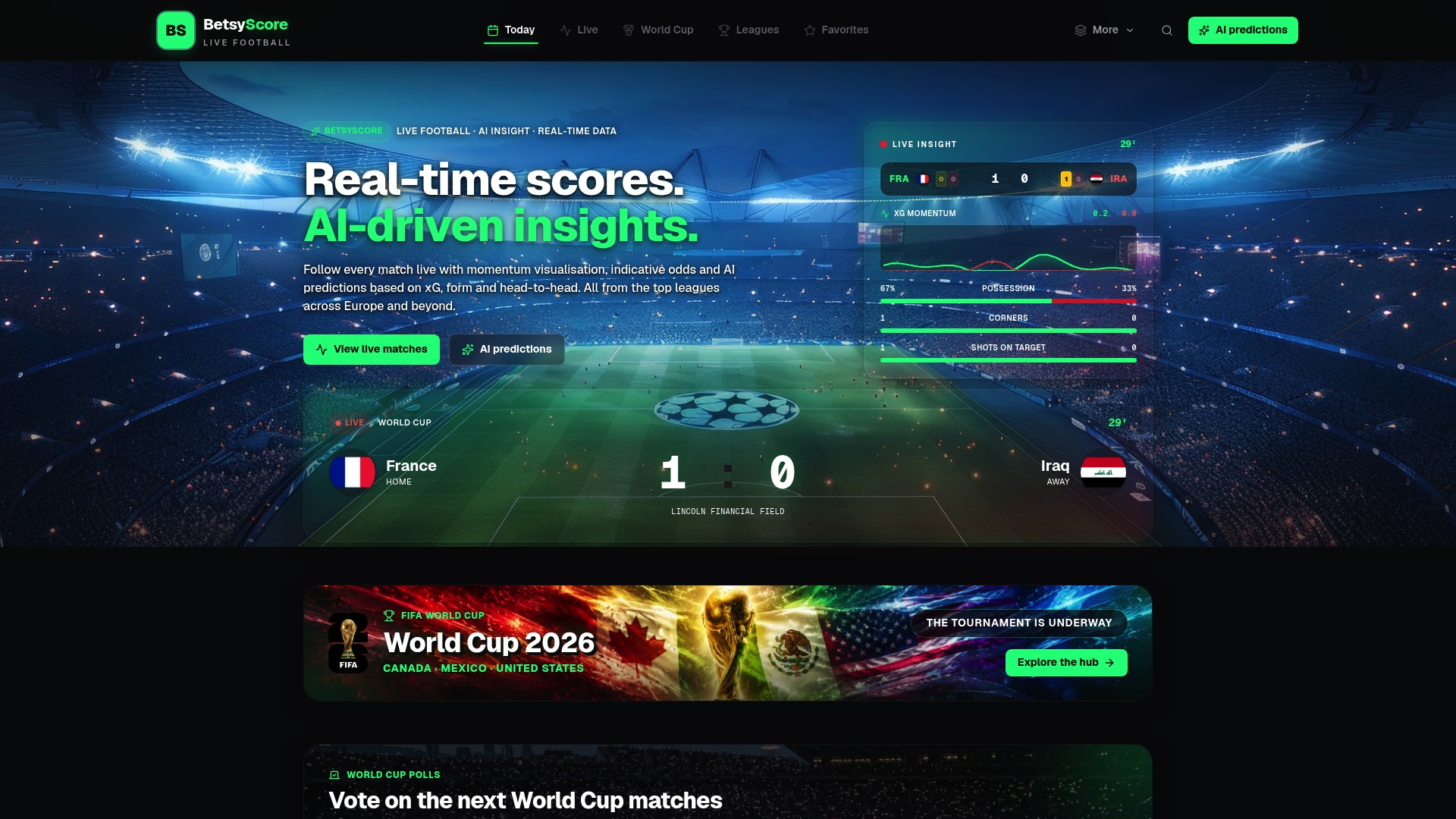
Every lineup update on Betsyscore connects directly to player profiles, match stats, and momentum tracking that updates minute by minute. Fans can check AI match predictions that incorporate confirmed lineup information alongside historical data across the Champions League and more than 200 competitions worldwide. The result is a single destination for every piece of information that matters before, during, and after kickoff.
FAQ
When are Champions League lineups officially released?
Official Champions League team sheets are released approximately 60 minutes before kickoff. UEFA and club channels publish them simultaneously, making that window the most reliable time to check.
What does a double pivot in midfield signal?
A double pivot signals the manager prioritizes possession control and defensive cover in central areas. It typically produces a slower tempo and reduces the opponent’s counter-attack opportunities.
How do lineups affect betting markets?
Betting odds move sharply after official lineups drop, shifting from pre-game estimates to lineup-adjusted probabilities. Markets often overcorrect initially, creating short windows of value before odds stabilize.
Why does bench composition matter for fantasy football?
Bench composition reveals which players are likely to earn full minutes and which face early substitution. Players starting in squads with limited attacking depth on the bench carry lower rotation risk and higher fantasy ceilings.
How can fans avoid acting on leaked lineup information?
Fans should follow official club and UEFA accounts rather than aggregator or rumor accounts. Leaked lineups circulate before the official release but carry real risk of inaccuracy, which can lead to poor fantasy or betting decisions.