How to Stay Updated on Global Soccer News Daily

The fastest way to stay updated on global soccer news is a three-layer setup: a live score hub refreshing every few seconds, a small set of verified beat reporters for transfer confirmations, and push alerts filtered to the matches you actually care about.
Start in the next 60 seconds:
- Enable push notifications for goal, card, and substitution events on your primary live source.
- Follow one official league account on X (formerly Twitter) for confirmed announcements.
- Add a Telegram channel from a beat reporter covering your primary league.
- Bookmark BBC Sport Football for verified breaking news and regional summaries.
- Set your calendar with local kickoff times for the week’s key fixtures.
That workflow covers speed, verification, and depth without requiring you to monitor a dozen tabs.
Key Takeaways
A reliable global soccer news workflow combines a near-real-time live hub, verified beat reporters, and filtered push alerts to deliver accurate updates without information overload.
| Point | Details |
|---|---|
| Use a live hub first | A live score source refreshing every few seconds is the fastest, lowest-noise match update available. |
| Verify transfers before sharing | Wait for two independent beat reporters or an official club channel before treating a transfer as confirmed. |
| Filter push alerts | Enable notifications for goals and red cards only; all-event alerts create fatigue without adding accuracy. |
| Manage time zones actively | Add fixtures to your calendar with local time conversions to avoid missing early European kickoffs. |
| Betsyscore for single-view coverage | Betsyscore covers 200+ competitions with live scores, AI win-probability, and minute momentum in one hub. |
Table of Contents
- What source types help you stay updated on global soccer news?
- What live-feed features actually matter for real-time scores?
- How do you tell confirmed transfer news from speculation?
- Where do you find fast highlights and deeper post-match analysis?
- How do you set up alerts and a match-day workflow?
- How do you verify breaking news before acting on it?
- How does Betsyscore help you follow live soccer in real time?
- Why this workflow is the right one
- Betsyscore gives you real-time soccer in one place
- Useful sources and further reading
- Sources
- FAQ
What source types help you stay updated on global soccer news?
Not every source delivers the same thing. Matching the right source to the right moment is what separates a clean, reliable feed from a noisy one.
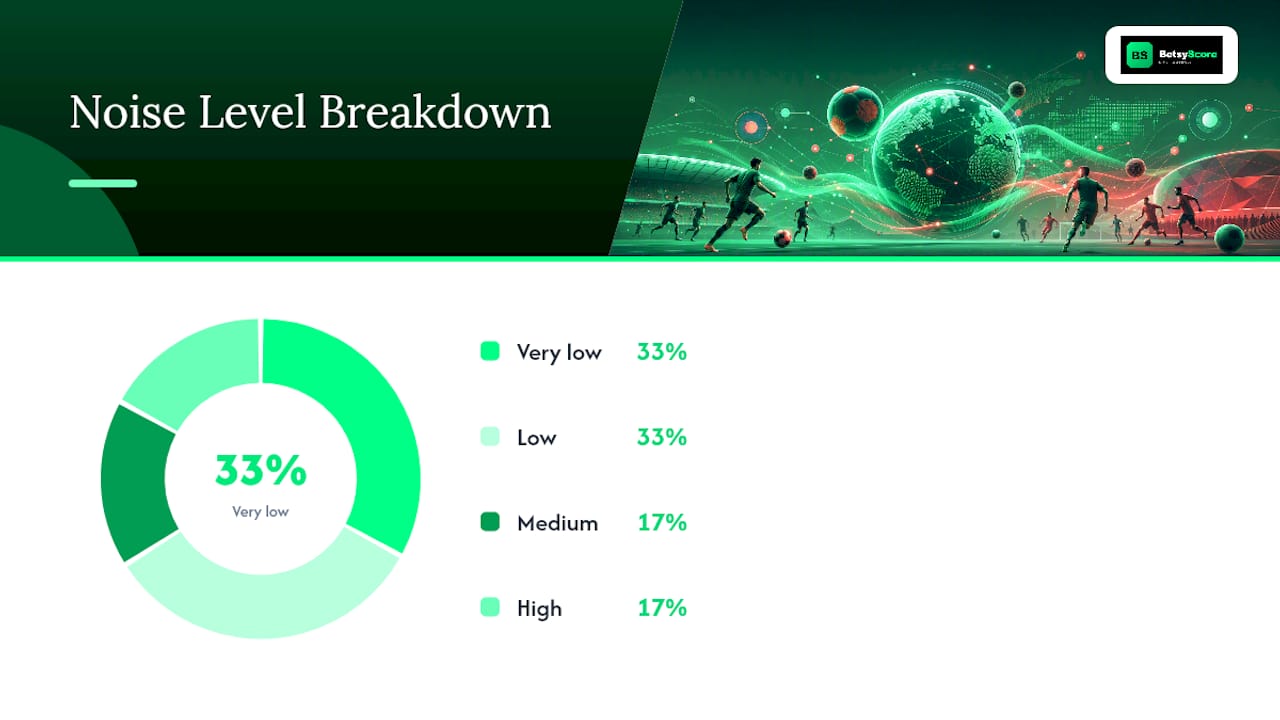
| Source Type | Update Speed | Verification Level | Best Use Case | Noise Level |
|---|---|---|---|---|
| Live tickers | Near-real-time (seconds) | Data-driven, automated | Scores, cards, subs during a match | Low |
| Official channels | Minutes | High (primary source) | Confirmed transfers, lineups, statements | Very low |
| Beat reporters | Minutes to hours | High (named sourcing) | Transfer confirmations, injury news | Low |
| Aggregators | Seconds to minutes | Mixed | Single-view dashboard for multiple matches | Medium |
| Social feeds | Seconds | Low to medium | Breaking rumors, fan reaction, clips | High |
| Podcasts | Hours to days | High (editorial) | Tactical analysis, weekly context | Very low |
How to combine sources on match day: Before kickoff, check the official club channel for the confirmed lineup. During the match, keep a live ticker open for real-time events. After the final whistle, switch to a beat reporter’s post-match thread for the first verified quotes and injury updates.
A second combination that works well: use an aggregator app for a single-view dashboard across multiple simultaneous matches, then drop into a podcast the following morning for tactical breakdown. Reuters soccer coverage demonstrates how wire services balance speed and breadth by tagging items as “confirmed” or “reported” before wider distribution.
- Live tickers are best for in-match events; they do not replace editorial verification for transfer news.
- Official club and league channels are the only primary sources for confirmed signings and contract extensions.
- Beat reporters, when named and credentialed, are the most reliable early signal for transfer market developments.
Pro Tip: Set social feeds to a dedicated X list containing only official league accounts and two or three named beat reporters. This cuts noise dramatically without losing speed.
What live-feed features actually matter for real-time scores?
A live score feed is only as useful as its refresh rate and the data it surfaces alongside the score. These are the features worth prioritizing:
- Update frequency: Scores and events should refresh every few seconds, not every minute. Latency above 30 seconds makes a live feed unreliable for in-play decisions.
- Live lineups: Confirmed starting XI data, ideally posted 60 minutes before kickoff, so you know the team shape before the whistle.
- Minute commentary: Timestamped event logs covering goals, cards, substitutions, and VAR decisions.
- Live xG and win-probability: Expected goals and win-probability percentages update the tactical picture beyond the scoreline. A team leading 1–0 with an xG deficit is in a different position than the score suggests.
- Substitution and card events: Instant alerts for these events are the most time-sensitive data points during a match.
- Timestamps on every event: Without timestamps, you cannot cross-reference events across two sources or verify which report came first.
Casual fans benefit most from features 1, 3, and 5. Data-driven fans get the most value from features 4 and 6. For live lineup tracking, a dedicated guide covers how to configure lineup alerts across major competitions.
Pro Tip: Run one primary live source and one backup. If your primary feed lags during a high-traffic match, the backup catches the event. Avoid running three or more simultaneously — redundant alerts create confusion, not clarity.
How do you tell confirmed transfer news from speculation?
Transfer reporting is the area where misinformation spreads fastest. These signals indicate a confirmed move:
- Official club or league announcement: The only definitive confirmation. A club’s verified social account or press release ends the speculation.
- Player or agent statement: Direct quotes from the player or their representative, attributed by name.
- Multiple independent beat reporters: When two or more credentialed reporters with separate sourcing networks publish the same detail, confidence rises significantly.
- Registration filing: In leagues with public registration systems, a federation post confirming player registration is near-certain confirmation.
- Transfer window context: A reported move outside an active transfer window requires additional scrutiny.
Common rumor patterns to recognize: single-source leaks attributed to “sources close to the club,” phrases like “in talks” or “personal terms agreed” without corroboration, and stories that cite only one outlet with no follow-up from rival reporters. Goal and ESPN Soccer both illustrate how specialist and multi-format outlets label transfer items as “reported” versus “confirmed” — a distinction worth checking before sharing any item.
Pro Tip: When a transfer story breaks, check the timestamp on the original report, then wait 20 minutes. If no second independent source has confirmed it, treat it as unverified speculation until one does.
Where do you find fast highlights and deeper post-match analysis?
Speed and depth rarely come from the same source. Knowing which to reach for saves time.
Fast-format sources deliver key-moment clips and short video reels within minutes of the final whistle. Broadcast partners with official rights, such as FOX Sports Soccer, post licensed highlight packages quickly. Official league YouTube channels and club social accounts publish short clips of goals and key moments, often within 10 minutes of the event.

Long-form analysis takes longer but goes further. Tactical post-match pieces, heat maps, and player rating data appear on data-focused outlets and in long-form journalism. The Guardian’s soccer coverage is a reliable model for in-depth match reports and investigative feature writing rather than minute-by-minute alerts. For a structured guide to sourcing highlights across competitions, this global fan’s guide to live soccer highlights covers the main options.
| Source Type | Speed | Depth | Accessibility |
|---|---|---|---|
| Official broadcast clips | Fast (minutes) | Low | High |
| Club social accounts | Fast (minutes) | Low | High |
| Data platforms | Slow (hours) | High | Medium |
| Long-form journalism | Slow (hours) | High | High |
Pro Tip: For a quick catch-up after missing a match, watch the official 90-second highlight reel first, then check xG and possession data to understand whether the result reflected the run of play.
How do you set up alerts and a match-day workflow?
A repeatable setup prevents missed moments and alert fatigue across time zones.
Setup steps:
- Choose one primary live source as your match hub and bookmark it.
- Enable push notifications for goals, red cards, and final whistles only — not every event.
- Create an X list containing official league accounts and two named beat reporters per league you follow.
- Add a Telegram channel from one credentialed reporter for your primary league.
- Add the week’s key fixtures to your calendar with local time conversions. For US-based fans following European leagues, a UTC offset reminder prevents missed early kickoffs.
- Open Betsyscore Live as your single aggregation view for simultaneous matches.
Match-day checklist:
- Pre-match: Check confirmed lineups 60 minutes before kickoff. Review win-probability and recent form.
- During match: Monitor live ticker for events. Check xG after each goal to assess whether it was expected or against the run of play.
- Post-match: Read one beat reporter’s post-match thread for verified quotes. Save long-form analysis for the following day.
Pro Tip: Use your phone’s Focus or Do Not Disturb settings to allow only your primary soccer alert source during non-match hours. This keeps the notification channel clean without disabling it entirely.
How do you verify breaking news before acting on it?
Verification checklist:
- Check the official club or league channel first. If it is not there, it is not confirmed.
- Look for two or more independent beat reporters publishing the same detail with separate sourcing.
- Confirm whether a federation or registration body has posted. AP News soccer coverage notes that international tournament stories carry higher variance, making verification especially important for upset results or unexpected squad changes.
- Cross-check timestamps. If the original report is more than two hours old with no follow-up, the story may have stalled or been retracted.
- Watch for retraction language: “we understand,” “sources suggest,” and “reported to be” all indicate unconfirmed status.
When it is acceptable to act on a rumor: for time-sensitive lineup decisions (pre-match), a single credentialed reporter’s claim about a starting XI is often reliable enough to act on. For long-term transfer decisions, wait for official confirmation.
Pro Tip: Search the club’s official account directly rather than relying on aggregated feeds. A retweet or reshare can strip the original timestamp and make a 48-hour-old rumor look current.
How does Betsyscore help you follow live soccer in real time?
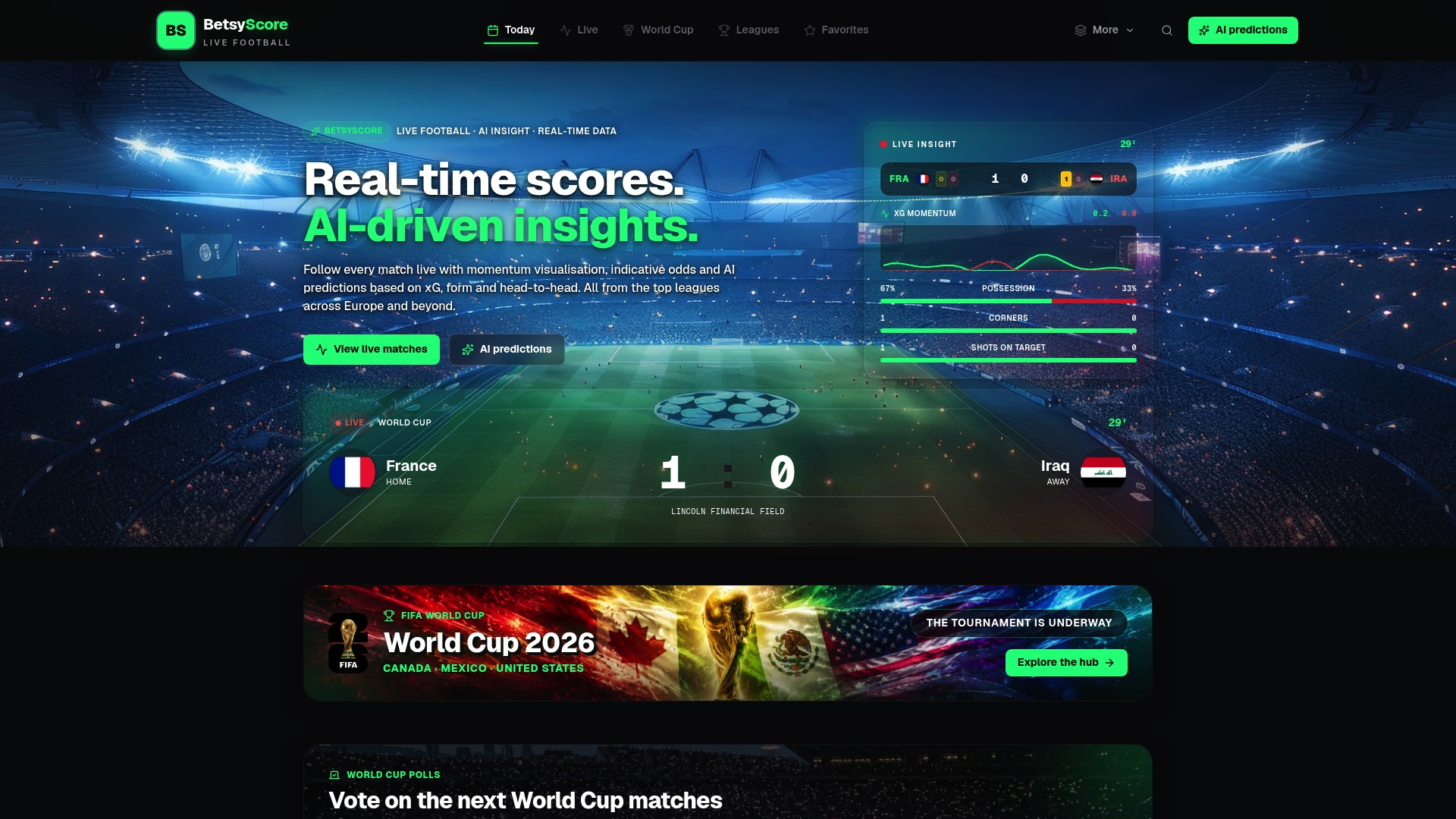
Betsyscore consolidates the core real-time features into one platform, covering more than 200 competitions worldwide including the FIFA World Cup 2026, Premier League, Champions League, La Liga, Bundesliga, and Serie A.
Features to enable first:
- Live hub: All active matches in one view, with scores refreshing every few seconds.
- Win-probability: AI-generated percentages built from expected goals, recent form, and head-to-head records. The Champions League predictions page shows how this data displays in practice.
- Minute momentum: A visual read of which team is controlling the match, updated continuously.
- Live lineups: Confirmed starting XI data posted before kickoff.
- Instant stats: Cards, substitutions, xG, and possession updated in real time.
A typical match session on Betsyscore:
- Pin the match you are following to keep it at the top of your feed.
- Enable push alerts for goals and red cards on that match.
- Monitor the win-probability graph as the match progresses to gauge momentum shifts.
- Check the instant stats panel after each goal for xG context.
Pro Tip: Pin two or three matches simultaneously during a busy fixture schedule — Betsyscore’s live hub keeps all pinned matches visible without requiring you to switch between tabs.
Why this workflow is the right one
The standard advice is to follow as many sources as possible. That approach creates noise, not clarity. The workflow described here does the opposite: it narrows the input to the fastest verified signal (a live hub), the most reliable confirmation layer (named beat reporters and official channels), and a single alert channel tuned to events that actually matter.
Following global football across multiple time zones and competitions, the consistent finding is that fans who limit their sources to three or four trusted inputs get more accurate information faster than those monitoring a dozen feeds. Minute-by-minute data, when read alongside xG and win-probability, adds context that a raw scoreline cannot provide. That combination, fast data plus verified editorial, is what makes the workflow reliable rather than reactive.
Betsyscore gives you real-time soccer in one place
Real-time scores, minute momentum, and AI win-probability are available now at Betsyscore Live. The platform covers the FIFA World Cup 2026, Premier League, Champions League, and more than 200 other competitions, with scores refreshing every few seconds and lineups posted before kickoff.
Spend seven days with alerts enabled and two or three matches pinned. Check the win-probability graph during a match and compare it against the final result. The combination of live data and AI predictions gives you a faster, more accurate read on any match than a scoreline alone. Open Betsyscore now and pin your first match.
Useful sources and further reading
These source types cover the full range from live scores to deep analysis:
- BBC Sport Football: Public broadcaster reliability for confirmed news, live updates, and regional summaries.
- ESPN Soccer: Multi-format coverage combining live scores, transfer trackers, and feature analysis.
- Goal: Specialist transfer tracking and club-focused match reports; strong on market developments.
- CBS Sports Soccer: — Diversified league tracking, standings, and opinion across major competitions.
- AP News Soccer: Wire service reporting with strong tournament and international match coverage.
- The Guardian Soccer: Long-form match reports and investigative features; best for post-match depth rather than live alerts.
Sources
Wire services like Reuters and multi-format outlets like CBS Sports cover the widest range of leagues and competitions. Aggregator platforms that track 200+ competitions, such as Betsyscore, give a single-view dashboard for fans following matches across different time zones.
- Football - latest news today, results & video highlights - BBC Sport
- Soccer on ESPN - Scores, Stats and Highlights
- Goal
FAQ
What is the fastest way to get live soccer scores?
A live ticker refreshing every few seconds, such as the Betsyscore live hub, is the fastest available format. Pair it with push alerts for goals and red cards to catch events without watching a screen continuously.
How do you know if a transfer report is confirmed?
A transfer is confirmed when an official club or league channel publishes an announcement, or when a player or agent makes a direct statement. Reports citing only “sources close to the club” remain unverified until a second independent reporter or official post corroborates the detail.
How do you avoid alert fatigue when following global soccer?
Limit push notifications to high-priority events only: goals, red cards, and final whistles. Use a dedicated X list or Telegram channel for transfer news rather than general social feeds, and set quiet hours outside your primary match windows.
What does xG mean and why does it matter for following a match?
Expected goals (xG) measures the quality of scoring chances created, not just the goals scored. A team with a higher xG than their opponent but a lower scoreline is likely performing better than the result suggests, which is useful context when reading a live score.