Eight Third Place Spots: World Cup 2026 Format for US Fans
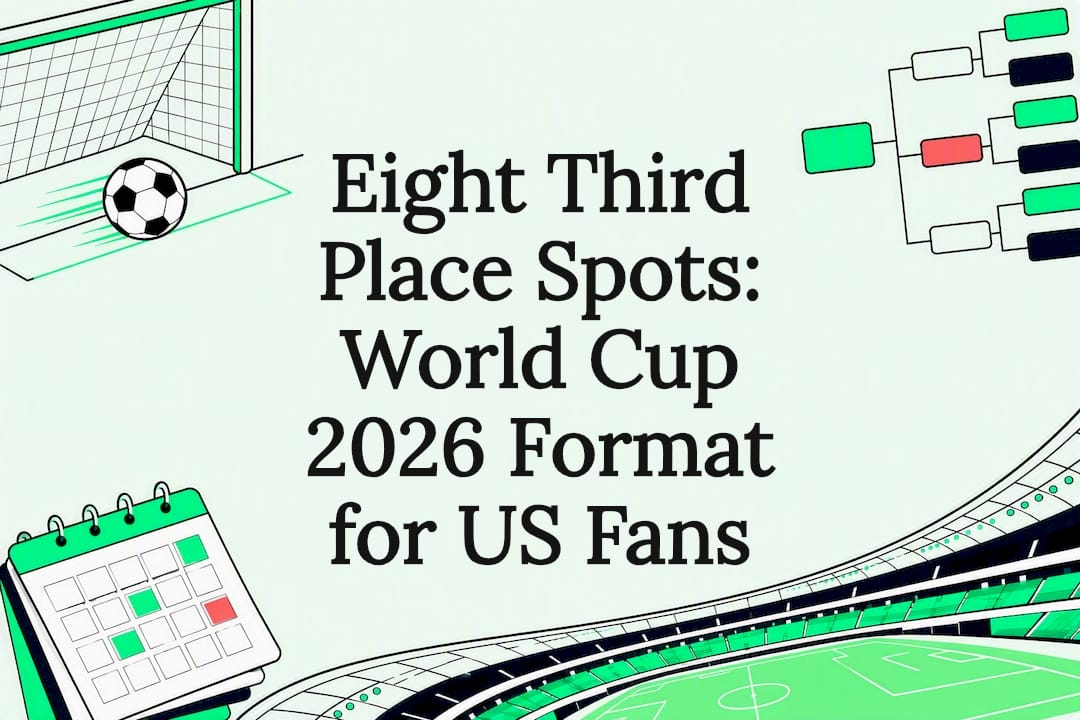
The 2026 FIFA World Cup runs 48 teams through 12 groups of four in a round-robin group stage. The top two teams from each group advance automatically, joined by the eight best third-place finishers, filling out a 32-team knockout bracket. From there, it’s single elimination through the round of 32, round of 16, quarterfinals, semifinals, a third-place match, and the final. FIFA’s official regulations set the tournament for June 11 to July 19, 2026, across the United States, Mexico, and Canada.
TL;DR:
- The group stage includes 12 groups of four teams, with no more than two UEFA teams per group and fixed host positions for Mexico, Canada, and the U.S.
- The top two teams from each group and the eight best third-placed teams advance to a 32-team knockout, with pairings accounting for all possible third-place scenarios.
- Qualification spots are allocated with 16 for UEFA, nine for Africa, eight for Asia, six for North/Central America and South America, one for Oceania, and two via intercontinental playoffs.
- The tournament features over 100 matches, a significant increase from previous editions, and runs across 39 days from June 11 to July 19, 2026.
- Real-time data tools and live updates help track permutations during the group stage, especially for determining which third-place teams advance.
Table of Contents
- Group Stage and Draw: Pots, Seeding, and Confederation Rules
- How the Round of 32 Comes Together
- Qualification and Slot Allocation: How the 48 Spots Break Down
- Tiebreakers and Ranking the Third-Place Teams
- Schedule, Match Count, and Matchday Breakdown
- How to Follow the Format Live: Standings, Permutations, and Data Tools
- Venue and Stadium Selection Criteria
- Player Workload and Scheduling Under the Expanded Format
- How Qualification Changed With 48 Team Slots
- Comparing 2026 to Previous World Cup Formats
- What the Bigger Field Means for Fans
- Track Every Permutation With Betsyscore
- Official Rules and Authoritative Explainers
- Sources
- FAQ
Group Stage and Draw: Pots, Seeding, and Confederation Rules
Every World Cup draw starts with pots, and 2026 is no different, except now there are 48 names to sort instead of 32. FIFA split the field into four pots of 12 teams, ranked according to the FIFA World Ranking at the time of the draw, with the three co-hosts anchoring Pot 1 by rule regardless of ranking. Each of the 12 groups draws exactly one team from each pot, guaranteeing a spread of ability rather than a group stacked with lower-ranked sides.
Confederation rules add another layer of restriction. UEFA, with the largest allocation, can never place more than two of its teams in the same group. Every other confederation, generally speaking, is capped at one team per group to avoid early regional rematches that fans and broadcasters alike find less compelling. The three hosts were pre-assigned to fixed slots during the draw, with Mexico occupying A1, Canada taking B1, and the United States sitting in D1, a detail confirmed by AP’s breakdown of the draw.
Inside each group, the format stays familiar: three round-robin matches, three points for a win, one for a draw, none for a loss. What’s changed is the math beyond the group winner and runner-up.
- Four pots of 12 teams each, seeded by FIFA ranking at the time of the draw
- No group can carry more than two UEFA teams
- Other confederations are limited to one representative per group in most cases
- Hosts occupy fixed positions: Mexico (A1), Canada (B1), United States (D1)
- Each team plays three group matches before knockout qualification is decided
How the Round of 32 Comes Together
Advancement math is where the 2026 World Cup 2026 group stage format gets genuinely interesting, because a third-place finish no longer guarantees elimination the way it did in the 32-team era.
- The 12 group winners advance automatically.
- The 12 group runners-up advance automatically.
- The eight best third-place teams, ranked across all 12 groups, claim the remaining knockout spots.
- Those 32 qualifiers slot into a bracket that FIFA fixed before the tournament even started.
Because nobody knows in advance which eight third-place teams will make it, FIFA built a bracket that accounts for every mathematically possible combination. Annex C of the official regulations lists a pairing for every scenario, so a group winner might face a third-placed team from Group E in one outcome and a third-placed team from Group H in another, depending on who actually finishes third. Once the round of 32 kicks off, the tournament reverts to the structure fans already know: win or go home, with extra time and penalty kicks resolving any draw in the knockout rounds, all the way through the round of 16, quarterfinals, semifinals, third-place match, and the final.
Qualification and Slot Allocation: How the 48 Spots Break Down
Qualification changed as much as the tournament itself. Expanding to 48 teams meant FIFA had to rewrite how each confederation earns its places, and the ESPN breakdown of the format lays out the new distribution clearly.
- UEFA (Europe): 16 direct slots
- CAF (Africa): 9 direct slots
- AFC (Asia): 8 direct slots
- CONCACAF (North/Central America, Caribbean): 6 direct slots, reduced from what it otherwise would be because Mexico, Canada, and the United States qualify automatically as hosts
- CONMEBOL (South America): 6 direct slots
- OFC (Oceania): 1 direct slot
- Remaining spots: decided through a six-team intercontinental play-off
That play-off tournament brings together six nations from five confederations (OFC included) to fight for the final two places in the 48-team field. Seeding in that mini-tournament runs on FIFA ranking, with the two highest-ranked teams getting byes into the final round. It’s a small event with an outsized effect on who ultimately fills out the 2026 World Cup teams.
Tiebreakers and Ranking the Third-Place Teams
Group standings rarely resolve cleanly, and FIFA’s regulations lay out a strict order for breaking ties both within a group and across the 12 third-place finishers competing for eight knockout spots.
- Points earned across all three group matches
- Goal difference
- Total goals scored
- Head-to-head result, when applicable and when only two teams are tied
- Fair play conduct, measured by yellow and red cards
- A drawing of lots, used only as an absolute last resort
Ranking the third-place teams works the same way, just applied across all 12 groups at once rather than within a single group of four. FIFA compares every third-place finisher on points first, then goal difference, then goals scored, working down the list until eight teams separate themselves from the other four. The full wording, including edge cases, sits in the official FIFA World Cup 26 regulations, and it’s worth a read for anyone tracking a tight scenario late in the group stage.
Schedule, Match Count, and Matchday Breakdown
The tournament opens June 11, 2026, and closes July 19, a 39-day window built to manage travel across three host countries, according to Al Jazeera’s schedule breakdown. Group play runs across three matchdays before the round of 32 begins, followed by tight turnarounds through the round of 16, quarterfinals, and semifinals, with the third-place match and final closing out the last week.
Total matches: reports vary on the exact number of matches played, with commonly cited figures around 104 matches, reflecting the increase from previous tournaments due to the expanded format. Either way, it’s a sharp jump from the 64 matches played in 2022, driven directly by the larger field and the extra knockout round the 48-team format requires.
How to Follow the Format Live: Standings, Permutations, and Data Tools
Tracking which third-place teams will actually advance gets complicated fast once four or five groups are playing their final matchday simultaneously. A live table that updates goal difference and points in real time makes all the difference between guessing and knowing.
- Live group tables update automatically as goals go in, so third-place rankings shift in real time rather than after full time
- Minute-by-minute momentum tracking shows which side is pressing for the goal that could flip a permutation
- AI-driven win probabilities, built from expected goals and recent form, help fans gauge how likely a late equalizer or üpset really is
- A dedicated World Cup 2026 hub keeps lineups, highlights, and bracket-relevant stats in one place
Pro Tip: Keep an eye on goal difference before fair play points. Most fans assume cards decide tight third-place ties, but goal difference and goals scored almost always settle it first.
Venue and Stadium Selection Criteria
FIFA didn’t pick 16 host cities at random. Venues had to meet strict capacity thresholds, generally north of 40,000 seats for group matches and closer to 80,000 for the final, hosted at MetLife Stadium in New Jersey. Beyond seating, FIFA evaluated pitch quality and grass type, given that several NFL stadiums needed hybrid or fully natural turf installed to meet competition standards.
Transport infrastructure mattered just as much as the stadium itself. Host cities needed proven capacity to move tens of thousands of fans efficiently, which is part of why major transit hubs like Los Angeles, New York, and Mexico City made the list while smaller markets did not. Climate played a role too. Scheduling in cities like Miami or Monterrey leans toward evening kickoffs to avoid peak summer heat, a lesson organizers carried over from past tournaments held in hot climates.
Accommodation capacity, existing security infrastructure, and prior experience hosting major events all factored into FIFA’s final selections. Cities that had already hosted Super Bowls, Olympic events, or Copa América matches had a clear advantage during the bidding process, since much of the operational groundwork was already in place. The result is a spread of 16 stadiums across three countries, each chosen as much for logistics as for atmosphere.
Player Workload and Scheduling Under the Expanded Format
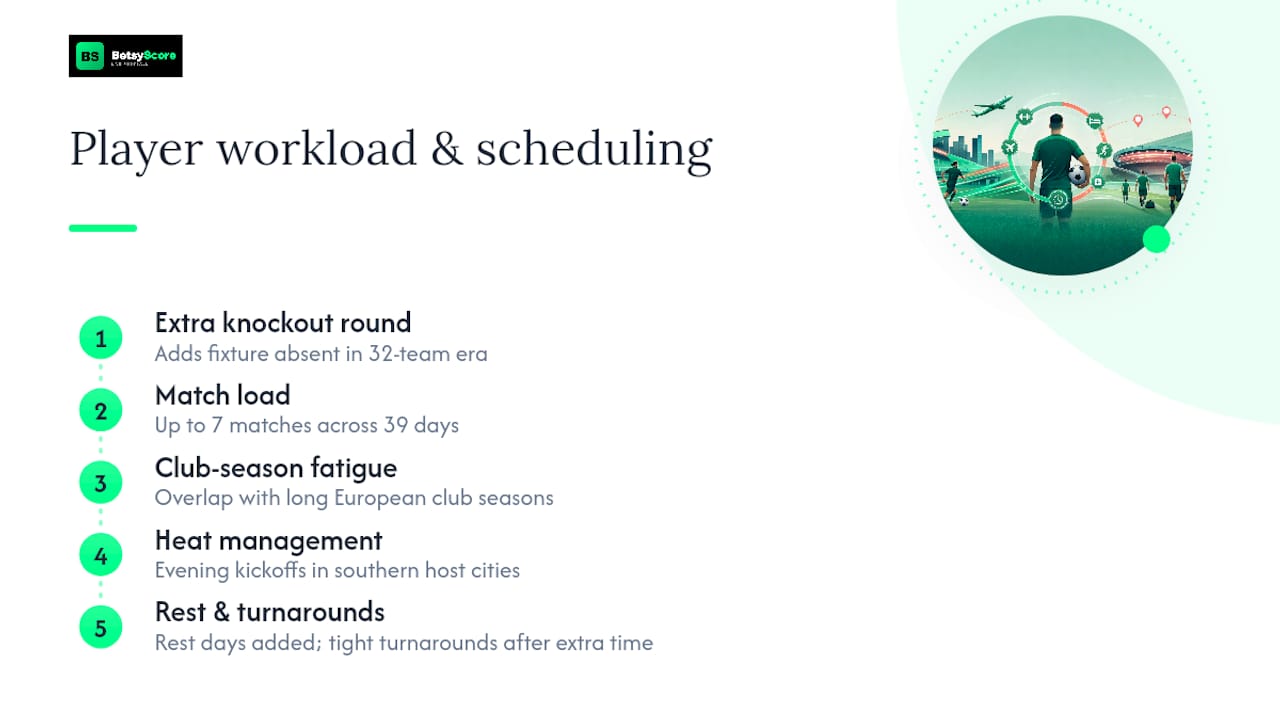
More teams means more matches, and more matches means a heavier load on the players expected to carry their national teams through an extra knockout round that didn’t exist in the 32-team era. A player whose team reaches the final now plays up to seven matches across 39 days, similar to the previous format’s total, but the compressed round of 32 adds a fixture that simply wasn’t there before.
The bigger workload concern sits earlier in the calendar. Club seasons in Europe already run long, and players arriving at a 48-team World Cup carry more fatigue from domestic campaigns that increasingly overlap with international windows. Analysts covering the expanded format point out that the extra round places real strain on squads that also have Champions League or continental commitments right up to the tournament’s start.
Heat management has become a scheduling priority too. Several group-stage matches in southern host cities are scheduled for evening kickoffs specifically to reduce heat exposure during peak summer months. FIFA also built rest days into the knockout calendar between rounds, though teams that go deep into extra time and penalties still face short turnarounds before their next match. It’s a tension the expanded format hasn’t fully solved, and it’s likely to shape roster rotation decisions for every serious contender.
How Qualification Changed With 48 Team Slots
Expanding from 32 to 48 teams forced FIFA to rebuild the entire qualification process, not just tack on extra places. Confederations that previously sent a handful of teams now send considerably more, and the ripple effects reached almost every region’s qualifying format.
CAF nearly doubled its allocation, which restructured Africa’s qualifying rounds to include more group stages and a longer path to the final berths. AFC saw a similar jump, and Asian qualifying now runs through an expanded set of rounds designed to give more nations a realistic shot at reaching the tournament rather than facing early elimination against traditional powers.
CONCACAF’s situation is unique because three of its members, Mexico, Canada, and the United States, qualify automatically as hosts. That reduces the confederation’s competitive qualifying slots even though its overall allocation grew, meaning the qualifying race among the rest of North and Central America and the Caribbean is tighter than the raw numbers suggest. The six-team intercontinental play-off also didn’t exist in this form before 2026, giving smaller footballing nations one final centralized chance at a place that previous formats simply didn’t offer.
Comparing 2026 to Previous World Cup Formats
The jump from 32 to 48 teams is the biggest structural shift in the tournament’s history, bigger even than the move from 24 to 32 teams that took effect in 1998. That earlier expansion added eight teams and one extra knockout round in some cycles; 2026 adds sixteen teams and permanently bakes in the round of 32, a stage that simply didn’t exist in the previous format.
The 32-team World Cup that ran from 1998 through 2022 used eight groups of four, with only the top two from each group advancing, straight into the round of 16. There was no such thing as a third-place team sneaking through, which made every final group match a cleaner, binary outcome. The 2026 format trades some of that simplicity for drama spread across more nations and more matchdays.
Total matches jumped from 64 in 2022 to over 100 in 2026, nearly a 60 percent increase, while the tournament length grew from 29 days to 39. More teams also means more debut nations, broadening the tournament’s global reach in a way the 32-team era, itself already an expansion from the 24-team format used from 1982 to 1994, never matched.
What the Bigger Field Means for Fans
I think the third-place mechanism is the most underrated part of this whole expansion. It turns matchday three of the group stage into genuine appointment viewing across every single group, not just the ones with drama already baked in. More matches, more permutations, more reasons to actually watch the “meaningless” fixtures. That’s the real gift of a 48-team field.
Track Every Permutation With Betsyscore
Following a dozen simultaneous matchday-three finales is a lot to hold in your head, and that’s exactly where live data earns its keep. Live group tables update automatically as goals go in, so third-place rankings shift in real time rather than after full time.
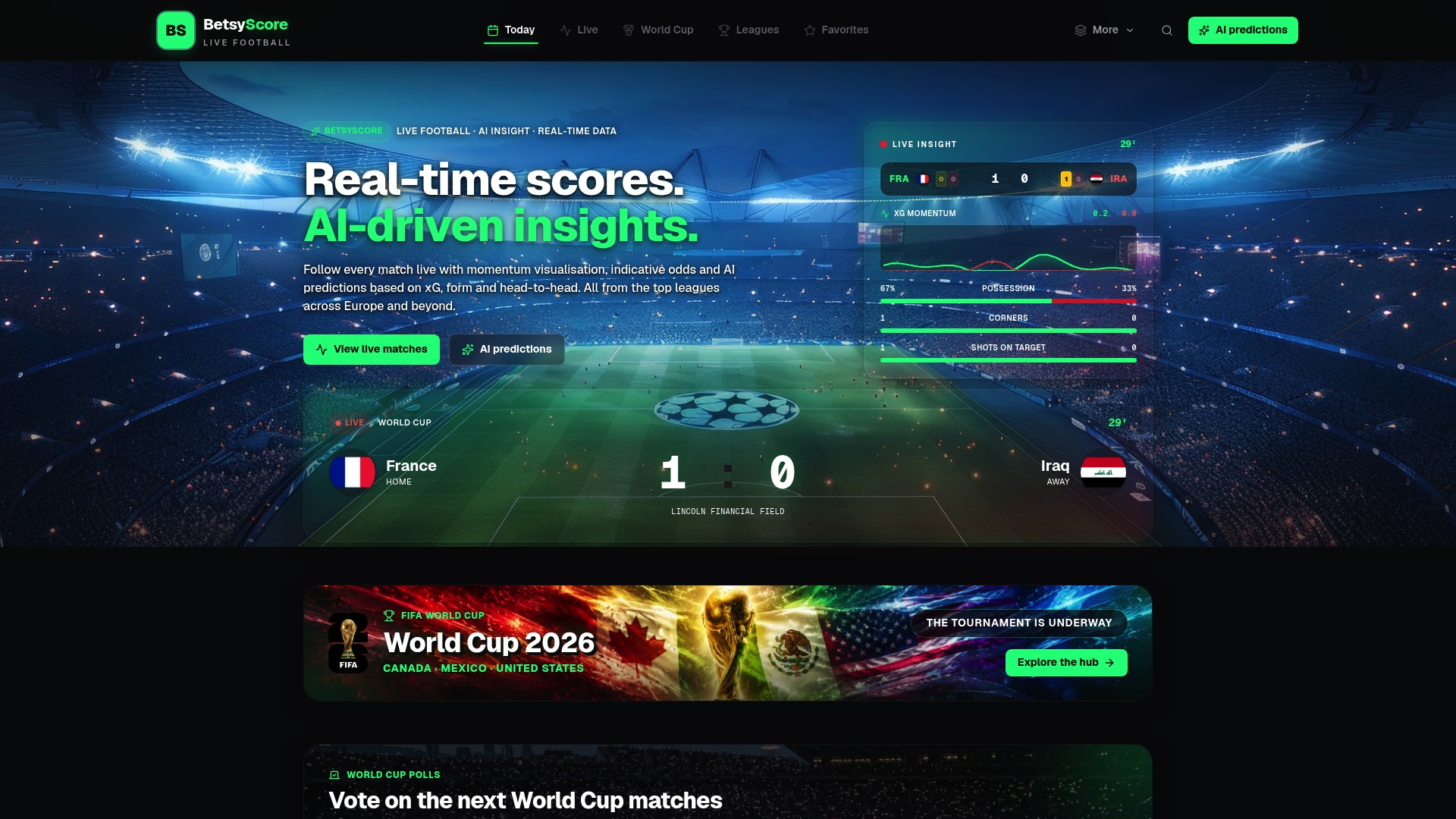
AI-driven win probabilities, built from expected goals and recent form, help fans gauge how likely a late equalizer or upset really is. Minute-by-minute momentum tracking shows which side is pressing for the goal that could flip a permutation. Check the live scores hub during matchday three of any group, or browse AI match predictions ahead of the round of 32 to see how the probabilities shift once the bracket locks in.
Official Rules and Authoritative Explainers
- FIFA World Cup 26 regulations: the official rulebook, including Annex C bracket permutations
- ESPN’s format breakdown: tiebreakers, fixtures, and schedule explained
- Sporting News bracket explainer: how seeding and third-place pairings work
- AP News draw explainer: pot composition and draw procedure
Sources
- FIFA World Cup 26 regulations (Competition format and schedule)
- 2026 FIFA World Cup: Format, groups, full match schedule, more - ESPN
- World Cup bracket, explained: How seeds, groups, format will work in expanded 48-team field for 2026 | Sporting News
- What’s the full match schedule, groups and format for World Cup 2026? | Al Jazeera
FAQ
What Is the Format of the World Cup 2026?
The tournament uses 48 teams split into 12 groups of four, with the top two from each group plus the eight best third-place finishers advancing to a 32-team knockout bracket decided by single elimination.
How Does the World Cup 2026 Tournament Work With 48 Teams?
Each team plays three round-robin group matches, then the 24 group winners and runners-up join eight third-place qualifiers in the round of 32, followed by the round of 16, quarterfinals, semifinals, and the final.
How Many Teams Advance From the Group Stage?
Thirty-two teams advance: 12 group winners, 12 runners-up, and the eight highest-ranked third-place finishers across all 12 groups.
When Does the 2026 World Cup Take Place?
The tournament runs from June 11 to July 19, 2026, across the United States, Mexico, and Canada.
How Does the World Cup 2026 Draw Work?
FIFA drew from four pots of 12 teams ranked by FIFA ranking, with each group receiving one team per pot and confederation rules preventing more than two UEFA teams from landing in the same group.
How Many Total Matches Are Played in the 2026 World Cup?
Reports vary around 104 matches, up sharply from the 64 matches played under the previous 32-team format.