How to Find Local Soccer Team Stats Easily
Finding local soccer team stats means accessing official league records, specialized analytics platforms, and match reports to track wins, losses, goals, and advanced metrics like expected goals. The standard industry term for this practice is soccer performance analysis, and it applies equally to fans following a neighborhood club or a regional amateur league. Sources like FBref, the National Premier Soccer League website, and youth soccer association pages each offer different levels of detail. This guide explains what statistics to look for, where to find them, and how to read the numbers to follow your team’s form with confidence.
What types of soccer team statistics should fans look for?
Soccer team statistics fall into three distinct layers, and understanding each one helps fans build a complete picture of team performance.
The first layer covers results data: wins, draws, losses, goals scored, and goals conceded. This is the starting point for any fan. A team with 10 wins and 3 losses tells a clear story at a glance. The second layer covers match-event data: shots on target, cards, corners, and possession percentages. These numbers explain how a result happened, not just what the result was.

The third layer is model data, built around advanced metrics like expected goals (xG) and expected goals against (xGA). These metrics measure the quality of chances created and conceded, not just the final tally. A team that consistently generates high xG but scores fewer actual goals is likely to improve. A team that wins while posting low xG numbers may be running on luck.
Additional metrics worth tracking include:
- Expected assists (xA): Measures the quality of passes that lead to shots, not just the passes that become goals.
- Goals per match average: A simple but reliable indicator of offensive output over a season.
- PPDA (passes allowed per defensive action): Tracks pressing intensity. Lower PPDA means a team presses more aggressively.
- Distance covered: Reflects physical commitment and can signal fatigue trends across a long season.
xG and related metrics are popular because they offer context on chance quality rather than just final scores. That context helps fans evaluate whether a team is genuinely improving or simply benefiting from favorable bounces.
Pro Tip: Start with results and goals data for any local team. Add xG and match-event stats only when the source you are using makes them available. Forcing advanced metrics from incomplete data produces misleading conclusions.
Where can you find local soccer team stats online?
The best source for local soccer team performance data depends on the level of competition your team plays in. Official league websites are the most reliable starting point.
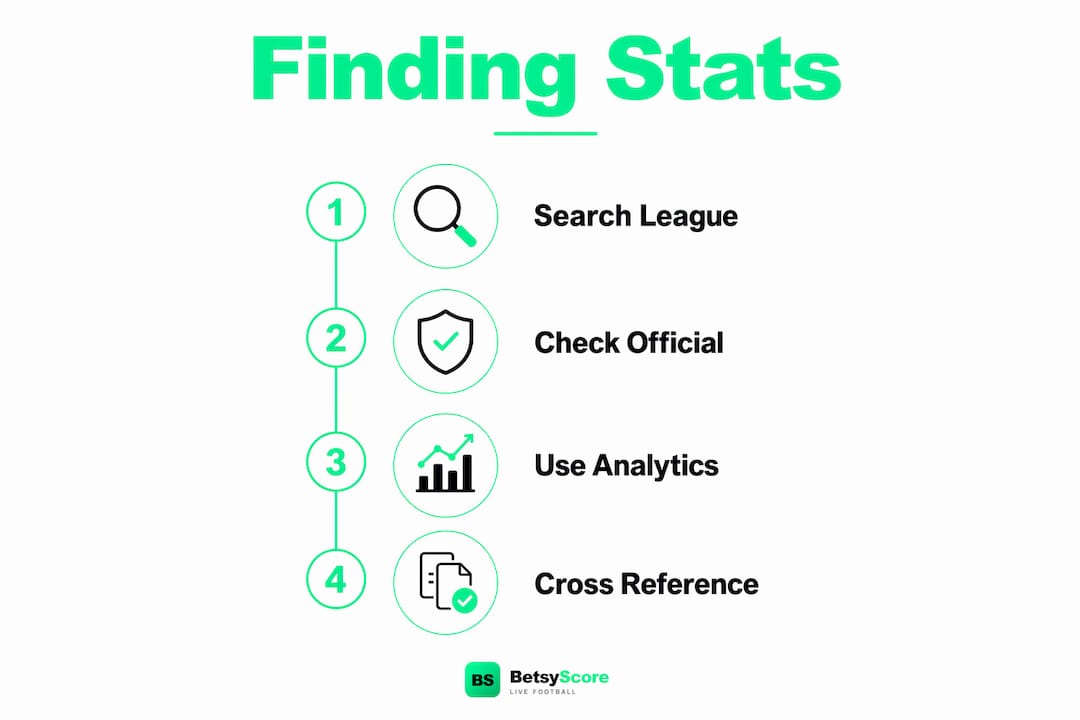
The NPSL conference standings page publishes real-time win-draw-loss records, points totals, and playoff positioning for the 2026 season. Youth soccer associations at the state and regional level maintain similar standings pages, though the depth of data varies widely. For fans of amateur or recreational leagues, the club or league website often posts match results and basic tables within 24 hours of each game.
For fans whose local team competes at a higher semi-professional or professional level, FBref is the most detailed free resource available. FBref offers team and player statistics including xG, match logs, and squad-level per-90 metrics for hundreds of competitions worldwide. The platform uses standardized data fields, which makes it possible to compare teams across different leagues on a consistent basis.
| Source | Coverage level | Data depth | Accessibility |
|---|---|---|---|
| Official league websites (e.g., NPSL) | Local and regional | Basic (W-D-L, standings) | Free, no account needed |
| Youth soccer association pages | Youth and amateur | Basic to moderate | Free, varies by association |
| FBref | Semi-pro to professional | Advanced (xG, match logs, per-90) | Free, account optional |
| Entry-level field apps | Amateur and recreational | Basic (scores, rosters) | Free or low-cost subscription |
| Enterprise analytics platforms | Professional clubs | Full event data | Paid, club-facing |
The availability of advanced stats depends directly on whether the league or club tracks sufficient event data publicly. Higher-level competitions publish richer data. Local amateur leagues typically publish results only.
Pro Tip: Cross-reference at least two sources when analyzing local soccer team results. The official league site confirms the record. A stats platform like FBref adds the context behind it.
How to navigate FBref for local soccer team data
FBref is the most widely used free stats resource for fans who want soccer team performance data beyond a simple standings table. Navigating it efficiently takes a few deliberate steps.
-
Start at the league index page. Search for your competition by name using the FBref search bar. The league index page shows the current season overview, including a standings table with goals scored, goals conceded, and xG totals for every team.
-
Click through to the team page. Each team name links to a dedicated page with squad-level statistics. Here you will find season totals for goals, assists, xG, and xGA, broken down by player and by match.
-
Open the match log. The match log is the most useful section for tracking recent form. Match logs reveal form trends and substitution patterns better than season totals. Each row represents one game, showing the opponent, result, xG for and against, and key events.
-
Check per-90 metrics. Season totals favor teams that have played more games. Per-90 metrics normalize performance to a standard 90-minute match, making comparisons fair across teams with different numbers of games played.
-
Use percentile ranks. FBref displays percentile ranks for most metrics, showing how a team compares to all others in the same competition. A team in the 80th percentile for xG is generating better chances than 80 percent of its league rivals.
-
Avoid over-reading small samples. A team’s xG numbers after three matches carry far less weight than after fifteen. Treat early-season data as directional, not definitive.
Standardized data fields like minutes, goals, xG, and cards from consistent sources enable effective like-for-like team comparison across leagues. That consistency is what makes FBref the reference point for fans who want to go beyond the scoreline.
How to interpret local soccer stats for trend analysis
Reading soccer statistics for trend analysis means combining all three data layers rather than relying on any single number. Results tell you what happened. Match-event data tells you how. Model data tells you whether it was sustainable.
Fan analysis works best when it layers results, match-event data, and model metrics progressively. Start with the W-D-L record and goal difference. Then add shots and possession data. Then, if available, layer in xG and xGA to test whether the results reflect genuine performance.
Specific techniques for spotting meaningful trends include:
- Shutout streaks: Official match reports sometimes cite minutes without conceding, such as a team going 426 minutes without allowing a goal. Defensive momentum can be quantified from derived stats like minutes without conceding, converting those figures into estimated match counts and weighting them by opponent difficulty.
- Form windows: The last five matches carry more predictive weight than the full season average. A team with a 6-8-4 record overall but a 4-0-1 record in its last five is trending upward.
- xG vs. actual goals gap: When a team’s actual goals significantly exceed its xG over many matches, regression toward the mean is likely. When actual goals fall well below xG, improvement is probable.
- Shot location data: Shots from inside the penalty area convert at a much higher rate than long-range efforts. A team generating most of its xG from central positions is more dangerous than raw shot counts suggest.
- Possession trends: A team that consistently holds 55 percent or more possession typically controls game tempo. Drops in possession percentage often precede drops in results.
The key distinction between meaningful shifts and statistical noise is sample size. Five matches is a trend signal. Two matches is a coincidence.
Key takeaways
Fans who combine official league standings with match-log data and xG metrics get the most accurate read on local soccer team performance.
| Point | Details |
|---|---|
| Start with results data | W-D-L records and goal difference are the foundation of any team analysis. |
| Add match-event context | Shots, possession, and cards explain how results happened, not just what they were. |
| Use xG for deeper evaluation | Expected goals reveal whether a team’s results reflect genuine performance or luck. |
| Match logs beat season totals | Recent form windows of five matches are more predictive than full-season averages. |
| Source quality determines depth | Official league sites give basic data; FBref provides advanced metrics for higher-level competitions. |
Stats are more accessible than most local fans realize
The gap between what professional analysts use and what an engaged local fan can access has closed considerably. When I started following lower-division soccer closely, the only data available was a standings table updated once a week. Now, leagues at the NPSL level publish real-time standings, and platforms like FBref cover competitions that would have been invisible to data tools a decade ago.
The mistake I see most often is fans skipping straight to advanced metrics before they understand the basic record. xG is a powerful tool, but it means nothing if you do not first know that your team has lost four of its last five. Build the foundation first.
The other underused resource is the official match report. Clubs publish these regularly, and they contain narrative data that no stats table captures. A report noting that a goalkeeper made seven saves in a 1-0 win tells you something xG alone cannot. Combining that narrative with the numbers gives you a fuller picture than either source provides on its own.
My honest recommendation for fans just starting out: spend two weeks reading only the standings and match results for your local team. Then add one new metric per week. By the end of a month, you will read a match log naturally and spot trends that casual fans miss entirely.
— Aria
Real-time soccer data at your fingertips with Betsyscore
For fans who want live match data alongside the historical stats they have been building, Betsyscore covers more than 200 competitions worldwide with scores that refresh every few seconds.

Betsyscore’s AI-powered predictions calculate win-probability percentages using expected goals, recent form, and head-to-head records, giving fans a data-driven view of each match before kickoff. Coverage spans the FIFA World Cup 2026, the Premier League, La Liga, Bundesliga, Serie A, and the Champions League, alongside hundreds of regional competitions. Fans can track live scores with momentum indicators that show which side is controlling the game minute by minute. For fans who follow both local leagues and international football, Betsyscore provides a single, fast, data-first destination for every match.
FAQ
What are the best free sources for local soccer team stats?
Official league websites like the NPSL and youth soccer association pages are the most reliable free sources for local team records. FBref provides advanced metrics for higher-level competitions at no cost.
What does xG mean in soccer statistics?
Expected goals (xG) measures the quality of scoring chances based on shot location, angle, and type. It helps fans evaluate whether a team’s goal tally reflects genuine performance or favorable finishing.
How do I find local soccer league standings online?
Search for your league by name and navigate to its official website, which typically publishes a standings table with wins, draws, losses, and points. Regional youth associations maintain similar pages for amateur competitions.
Are match logs more useful than season totals for trend analysis?
Match logs are more revealing for observing recent form and tactical shifts than aggregated season statistics. A five-match form window from a match log predicts near-term performance more accurately than a full-season average.
Can I access youth soccer team statistics the same way as professional stats?
Youth soccer team statistics are generally limited to basic results and standings published by the organizing association. Advanced metrics like xG are rarely available at the youth level because most youth leagues do not track the event data required to calculate them.