The Biggest Football Rivalries: Live Data Guide
The world’s biggest football rivalries are El Clásico (Real Madrid vs. Barcelona), the Superclásico (Boca Juniors vs. River Plate), the Old Firm (Celtic vs. Rangers), the Derby della Madonnina (Inter vs. AC Milan), the Northwest Derby (Liverpool vs. Manchester United), Der Klassiker (Bayern München vs. Borussia Dortmund), the Merseyside Derby (Liverpool vs. Everton), El Tráfico (LAFC vs. LA Galaxy), the Cascadia derbies (Seattle, Portland, Vancouver), and the New York derby (New York Red Bulls vs. NYCFC). Each fixture carries a weight that goes far beyond three points.
- El Clásico — Real Madrid vs. Barcelona (Spain)
- Superclásico — Boca Juniors vs. River Plate (Argentina)
- Old Firm — Celtic vs. Rangers (Scotland)
- Derby della Madonnina — Inter Milan vs. AC Milan (Italy)
- Northwest Derby — Liverpool vs. Manchester United (England)
- Der Klassiker — Bayern München vs. Borussia Dortmund (Germany)
- Merseyside Derby — Liverpool vs. Everton (England)
- El Tráfico — LAFC vs. LA Galaxy (USA)
- Cascadia derbies — Seattle Sounders vs. Portland Timbers vs. Vancouver Whitecaps (USA/Canada)
- New York derby — New York Red Bulls vs. NYCFC (USA)
Betsyscore tracks all of these fixtures with live scores and AI predictions updated second by second, so fans never miss a momentum swing.
Table of Contents
- What makes a match one of the biggest football rivalries?
- How do the greatest football derbies compare by region?
- Which iconic matches still define these famous football rivalries?
- How do rivalries reflect culture, politics, and identity?
- Cheat sheet: when do these derbies happen and who leads head-to-head?
- How to follow these rivalry matches live with data signals and AI predictions
- Key Takeaways
- What following derbies live actually reveals
- Betsyscore brings every derby to life with real-time AI predictions
- Useful sources and further reading
- FAQ
What makes a match one of the biggest football rivalries?
A fixture earns derby status through a specific combination of factors: geographic proximity, sustained trophy competition, historical grievances, and cultural or political identity. Derbies are defined by resentment, passion, and sometimes political history, and they are typically the season’s most anticipated fixtures regardless of league position.
History alone is not enough. What sustains intensity across decades is generational memory reinforced by recurring high-stakes matches — cup deciders, title races, and continental clashes. Historical grievances and fan culture keep rivalries fierce even during periods when star players are absent. The Messi vs. Ronaldo era spiked global attention for El Clásico, but the rivalry predates both men by more than a century.
Indicators worth watching when evaluating a derby’s weight:
- Attendance and sell-out frequency relative to the stadium’s normal fill rate
- Ultras or organized supporter presence and their political or cultural affiliations
- Head-to-head record across all competitions, not just the current season
- Media rights premiums broadcasters pay specifically for that fixture
- Political or regional symbolism attached to the clubs’ cities or ownership
Pro Tip: When watching a heated derby, track the referee’s decision rate in the first 20 minutes. High-pressure fixtures often see early bookings that shift tactical shape before xG models have enough data to be reliable.
How do the greatest football derbies compare by region?
| Derby | Clubs | Historical/Political Roots | Typical Frequency |
|---|---|---|---|
| El Clásico | Real Madrid vs. Barcelona | Catalan identity vs. Spanish centralism; Franco-era suppression | 2–4x per season (La Liga, Copa del Rey, Supercopa) |
| Superclásico | Boca Juniors vs. River Plate | Buenos Aires class divide; working-class south vs. affluent north | 2–3x per season (Liga Profesional, Copa) |
| Old Firm | Celtic vs. Rangers | Catholic/Irish vs. Protestant/Unionist sectarian divide | 4x per season (Scottish Premiership, Cup) |
| Derby della Madonnina | Inter Milan vs. AC Milan | City-wide identity; working-class vs. bourgeois historical split | 2x per season (Serie A) + cups |
| Northwest Derby | Liverpool vs. Manchester United | Economic rivalry; port city vs. industrial city, sustained trophy competition | 2x per season (Premier League) + cups |
| Der Klassiker | Bayern München vs. Borussia Dortmund | National dominance rivalry; Bavaria vs. Ruhr Valley | 2x per season (Bundesliga) + DFB-Pokal |
| Merseyside Derby | Liverpool vs. Everton | Intra-city; families split across both clubs | 2x per season (Premier League) |
| El Tráfico | LAFC vs. LA Galaxy | Los Angeles civic identity; new money vs. established MLS franchise | 2–3x per season (MLS) |
| Cascadia derbies | Seattle/Portland/Vancouver | Pacific Northwest regional identity; three-way MLS rivalry | 4–6x per season (MLS regular season + playoffs) |
| New York derby | New York Red Bulls vs. NYCFC | Dual-city metro identity; outer borough vs. Manhattan | 2x per season (MLS) |
Global reach vs. local intensity: El Clásico and the Superclásico command the largest international audiences. The Old Firm, Northwest Derby, and Der Klassiker sit just behind in global broadcast reach. El Tráfico, the Cascadia derbies, and the New York derby carry strong local intensity within MLS markets, with growing national viewership as the sport expands in the United States ahead of the FIFA World Cup 2026.
For fans tracking the Superclásico or the Northwest Derby, Betsyscore maintains dedicated derby pages with full head-to-head histories and live coverage.
Which iconic matches still define these famous football rivalries?
Specific matches function as permanent reference points in rivalry lore. Fans cite them to establish bragging rights, and broadcasters use them to frame preview packages years later.
- El Clásico, 2010 — “La Manita”: Barcelona defeated Real Madrid 5–0 at Camp Nou. The term La Manita (little hand, five fingers) entered El Clásico lore as a taunt that Madrid supporters still hear today.
- El Clásico all-time record: Real Madrid’s 11–1 Copa del Rey victory in 1943 remains the largest margin in the fixture’s history. Across 264 competitive meetings, the head-to-head stands at 106 wins apiece with 52 draws.
- Superclásico, 2018 Copa Libertadores Final: The first-ever Superclásico played outside Argentina, staged in Madrid after crowd violence forced a venue change. River Plate won 3–1 on aggregate, a result that reshaped the rivalry’s modern chapter.
- Old Firm, 1957 Scottish Cup Final: Celtic’s 7–1 win over Rangers remains the largest margin in a major cup final between the two clubs and is still referenced in supporter culture.
- Northwest Derby, 1895: Liverpool’s 7–1 win over Manchester United stands as the record scoreline in this fixture.
- Der Klassiker, Bundesliga dominance: Bayern München’s 11–1 win over Borussia Dortmund is the record scoreline in that fixture, though modern editions are typically decided by a single goal.
- El Tráfico, 2019 MLS Cup Playoffs: LAFC vs. LA Galaxy produced a 5–3 thriller that introduced the rivalry to a national American audience and established El Tráfico as MLS’s marquee derby.
Stat: Real Madrid and Barcelona have met numerous times in competitive matches, with the all-time head-to-head closely contested.
How do rivalries reflect culture, politics, and identity?
Many of the top football rivalries are social mirrors. The result on the pitch matters, but what gives these fixtures their weight is what they represent off it.
- El Clásico: Catalan identity vs. Spanish centralism — the Franco dictatorship’s suppression of regional languages made Barcelona a symbol of resistance, a meaning that persists in the fixture today.
- Old Firm: Scotland’s Catholic/Protestant sectarian divide maps directly onto Celtic (Catholic, Irish immigrant roots) and Rangers (Protestant, Unionist). The fixture has been linked to community tensions in Glasgow for over a century.
- Superclásico: Buenos Aires geography encodes class. Boca Juniors represent the working-class La Boca neighborhood; River Plate, historically associated with wealthier northern districts, carry the nickname Los Millonarios.
- Northwest Derby: The economic rivalry between Liverpool’s port economy and Manchester’s industrial base created a civic antagonism that football absorbed and amplified across generations.
- New York derby: NYCFC’s Manhattan identity versus the Red Bulls’ outer-borough base reflects a broader New York civic tension that MLS has leaned into as the league grows.
Fans attending any of these fixtures in person should be aware that cultural and political dimensions can intensify crowd behavior. Respectful engagement with local supporter culture is always the appropriate standard.
Cheat sheet: when do these derbies happen and who leads head-to-head?
| Derby | Typical Calendar Window | Frequency | Head-to-Head Snapshot |
|---|---|---|---|
| El Clásico | October, March (La Liga); January (Supercopa) | 2–4x/season | 106–106–52 (Madrid–Barça–Draws) across 264 matches |
| Superclásico | March–June, August–December (Liga Profesional) | 2–3x/season | River Plate lead all-time in Argentine league |
| Old Firm | August–May (Scottish Premiership) | 4x/season | Celtic lead overall in modern era |
| Derby della Madonnina | September–May (Serie A) | 2x/season + cups | Inter lead in recent Serie A editions |
| Northwest Derby | August–May (Premier League) | 2x/season + cups | Liverpool lead all-time; rivalry details |
| Der Klassiker | August–May (Bundesliga) | 2x/season + DFB-Pokal | Bayern München lead all-time |
| Merseyside Derby | August–May (Premier League) | 2x/season | Liverpool lead all-time |
| El Tráfico | March–October (MLS) | 2–3x/season | LAFC lead in recent MLS seasons |
| Cascadia derbies | March–October (MLS) | 4–6x/season | Seattle Sounders lead overall |
| New York derby | March–October (MLS) | 2x/season | New York Red Bulls lead all-time |
- Check the Betsyscore derbies hub for confirmed fixture dates as soon as schedules are published.
- El Clásico and the Superclásico frequently kick off at times that fall between 9:00 AM and 3:00 PM ET; MLS derbies typically run 7:30–10:00 PM ET.
- For European fixtures, a time-zone converter set to CET is the fastest reference point.
Pro Tip: Set Betsyscore push notifications for each derby individually. The platform covers more than 200 competitions, so filtering by derby name keeps alerts relevant without noise from unrelated fixtures.
How to follow these rivalry matches live with data signals and AI predictions
The single most useful live signal during a football rivalry match is the combination of live expected goals (xG) and momentum read. Together, they show not just who is scoring but who is creating quality chances and controlling the game’s direction.
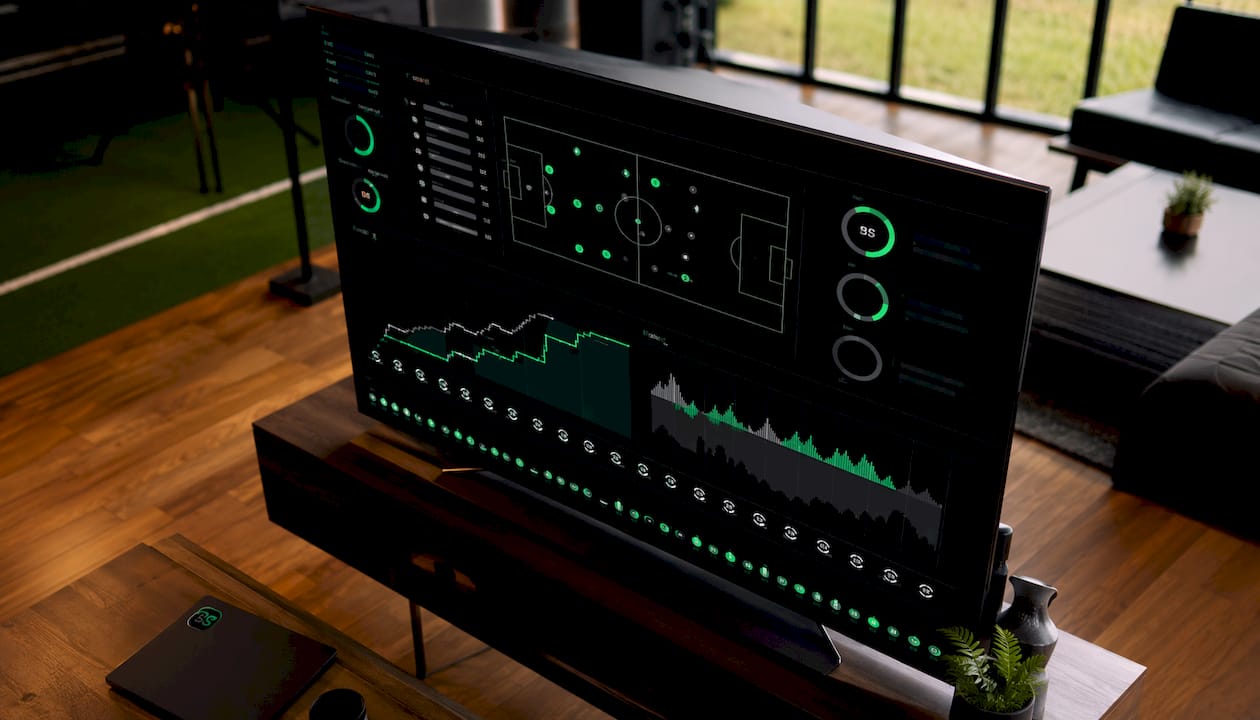
AI prediction models on platforms like Betsyscore update win-probability percentages continuously, drawing on live xG, shot quality, recent form, and head-to-head records. A team that trails 1–0 but holds a 1.4 xG advantage after 60 minutes will show a higher comeback probability than the scoreline suggests. Substitutions matter too: a high-press forward replacing a defensive midfielder shifts the model’s momentum read within minutes.
Checks to run during any top derby:
- Pre-kickoff: Confirm the starting lineup on Betsyscore’s live match page. A missing key forward or a surprise defensive shape changes the pre-match probability significantly.
- Minutes 1–15: Watch the xG swing. Early pressure in derbies is often tactical posturing; wait for the xG to confirm genuine dominance before reading the probability shift as meaningful.
- VAR decisions: A disallowed goal or red card creates a sharp probability spike. AI models recalibrate within seconds, but the initial swing is often an overreaction.
- Substitution windows (60–75 min): Manager decisions here carry the most predictive weight. Track how the momentum read shifts in the five minutes after a substitution.
Pro Tip: Short-term probability swings of 10–15 percentage points after a single event (a yellow card, a missed penalty) typically normalize within five minutes. Use the momentum trend line, not the instantaneous spike, to read the match.
Key Takeaways
The biggest football rivalries combine historical depth, cultural identity, and sustained trophy competition — and live data signals like xG and momentum are the most reliable tools for following them in real time.
| Point | Details |
|---|---|
| Top rivalries span every continent | El Clásico, Superclásico, Old Firm, Der Klassiker, and El Tráfico represent Europe, South America, and North America. |
| Cultural context drives intensity | Political and regional identity, not just form, sustains rivalry heat across generations. |
| El Clásico is perfectly balanced | Real Madrid and Barcelona are level at 106 wins each across 264 competitive meetings. |
| Live xG is the key in-match signal | Expected goals plus momentum read give the most reliable picture of who controls a derby in real time. |
| Betsyscore covers all major derbies | Set derby-specific alerts on Betsyscore to track lineups, live xG, and AI win-probability updates. |
What following derbies live actually reveals
There is a specific quality to watching a rivalry match with live data open alongside the broadcast. The scoreline tells you what happened; the xG and momentum read tell you what is happening. In a 0–0 Old Firm at halftime, a 1.2 vs. 0.3 xG split is a story the broadcast camera does not always show. That gap is where the match is actually being decided. Betsyscore’s live prediction feed makes that gap visible, which changes how you read the next 45 minutes. For derbies especially, where a single set piece or red card can flip the result, having the probability model updating in real time is the difference between reacting and understanding.
Betsyscore brings every derby to life with real-time AI predictions
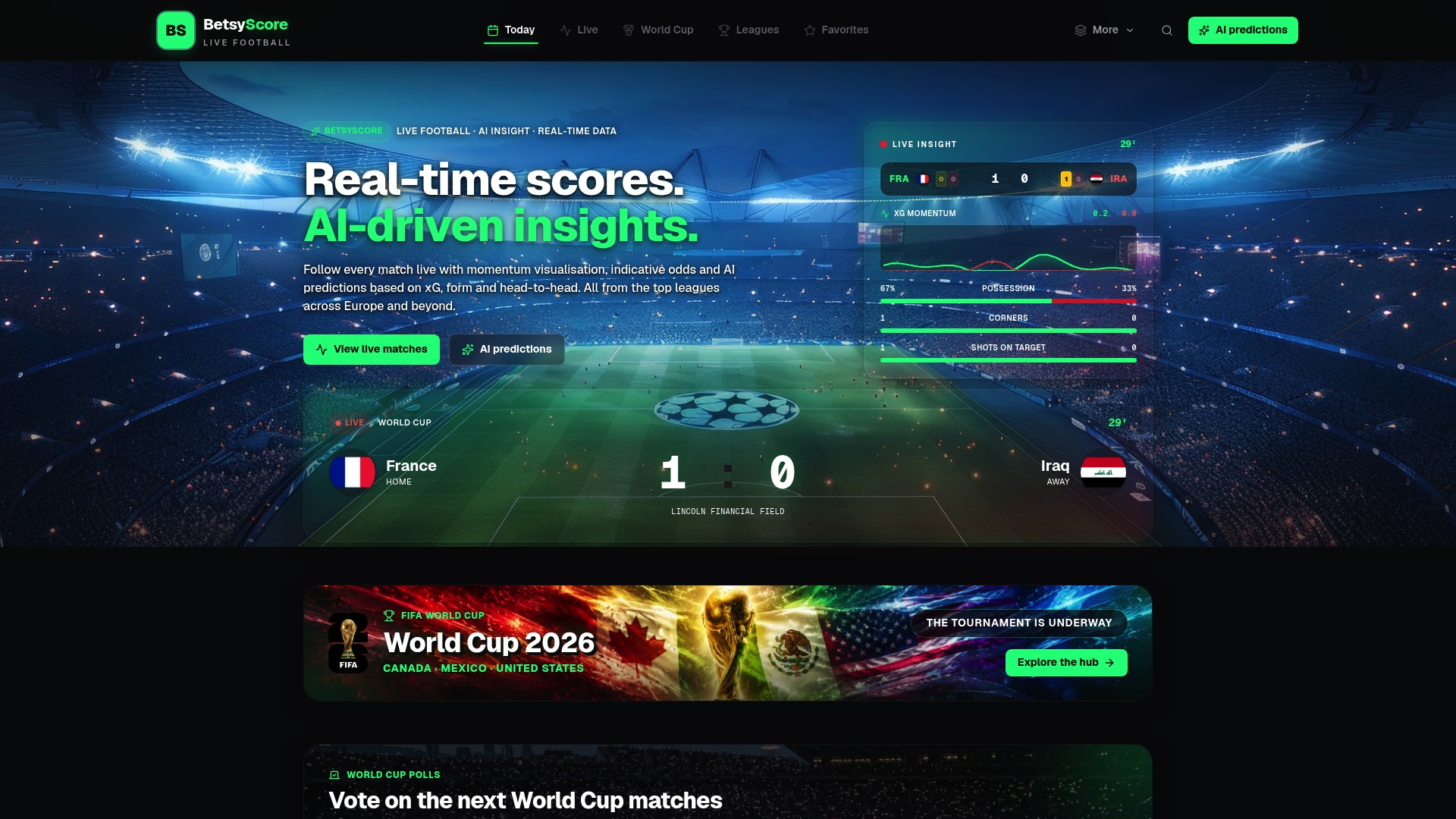
Betsyscore delivers second-by-second live scores, AI win-probability updates, and momentum reads for every major derby on this list, from El Clásico to El Tráfico.
Core features for derby-watching:
- Second-by-second scores with automatic refresh across all competitions
- AI win-probability built from live xG, recent form, and head-to-head records
- Momentum read showing which side is controlling the match minute by minute
- Live lineups and substitution alerts so tactical shifts register immediately
- Push notifications for key events: goals, red cards, VAR decisions
Coverage spans the Premier League, La Liga, Bundesliga, Serie A, the Champions League, MLS, and more than 200 competitions worldwide, including the FIFA World Cup 2026. Check AI predictions for the next scheduled derby and set your alerts before kickoff.
Useful sources and further reading
- List of association football rivalries — Wikipedia: comprehensive global catalogue organized by FIFA confederation.
- El Clásico head-to-head history — Sporting News: sourced scorelines, trophy totals, and all-time records.
- Official El Clásico page — FC Barcelona: club-side history including La Manita and defining moments.
- Liverpool vs. Manchester United rivalry — Wikipedia: head-to-head data and rivalry context for the Northwest Derby.
- Top 12 Biggest Football Rivalries — SportsBoom: list-style overview including global derbies beyond Europe.
- The Biggest Rivalries in World Football — Lower Block: cultural and political analysis of top fixtures.
- 25 Fiercest Rivalries in World Football — GiveMeSport: ranked analysis of what sustains rivalry intensity over time.
- Betsyscore derbies hub: live coverage, head-to-head stats, and AI predictions for all major derbies.
- Betsyscore El Clásico page: dedicated match history and live data for Real Madrid vs. Barcelona.
- Betsyscore Der Klassiker page: Bayern München vs. Borussia Dortmund coverage and live tracking.
FAQ
What is the biggest football rivalry in the world?
El Clásico (Real Madrid vs. Barcelona) is most widely cited as the world’s biggest football rivalry, combining global broadcast reach, 264 competitive meetings, and a political dimension rooted in Catalan identity versus Spanish centralism.
Why are football rivalries so intense?
Derbies draw intensity from a combination of geographic proximity, historical grievances, cultural or political identity, and sustained trophy competition. These factors sustain passion independently of either club’s current form or league position.
What is the biggest football rivalry in the United States?
El Tráfico (LAFC vs. LA Galaxy) is MLS’s most prominent rivalry nationally, while the Cascadia derbies (Seattle, Portland, Vancouver) carry the deepest regional intensity and the longest history within American professional football.
How does Betsyscore help fans follow derby matches live?
Betsyscore provides second-by-second live scores, AI win-probability updates built from live xG and head-to-head data, and a momentum read that updates minute by minute. Fans can set push notifications for specific derbies at betsyscore.com/live.
How often do the biggest derbies occur each season?
Frequency varies by competition structure. The Old Firm occurs four times per Scottish Premiership season; El Clásico and the Northwest Derby typically occur twice in the league plus additional cup meetings. MLS derbies like El Tráfico and the Cascadia fixtures can occur two to six times per season depending on playoff draws.