How World Cup Results Affect Rankings: 2026 Guide
FIFA rankings are defined by an Elo-based points formula that recalculates after every international match, making World Cup results the single most powerful driver of ranking movement. Understanding how world cup results affect rankings requires knowing three variables: match outcome, opponent strength, and match importance weighting. FIFA rankings update in real-time during tournaments, meaning a single knockout win can shift a team from second place to first overnight. France proved this at the 2026 World Cup, reclaiming the top spot after one Round of 16 victory. Every group stage match, every penalty shootout, and every quarterfinal carries a specific numerical weight that feeds directly into global standings.
How world cup results affect rankings: the FIFA formula explained
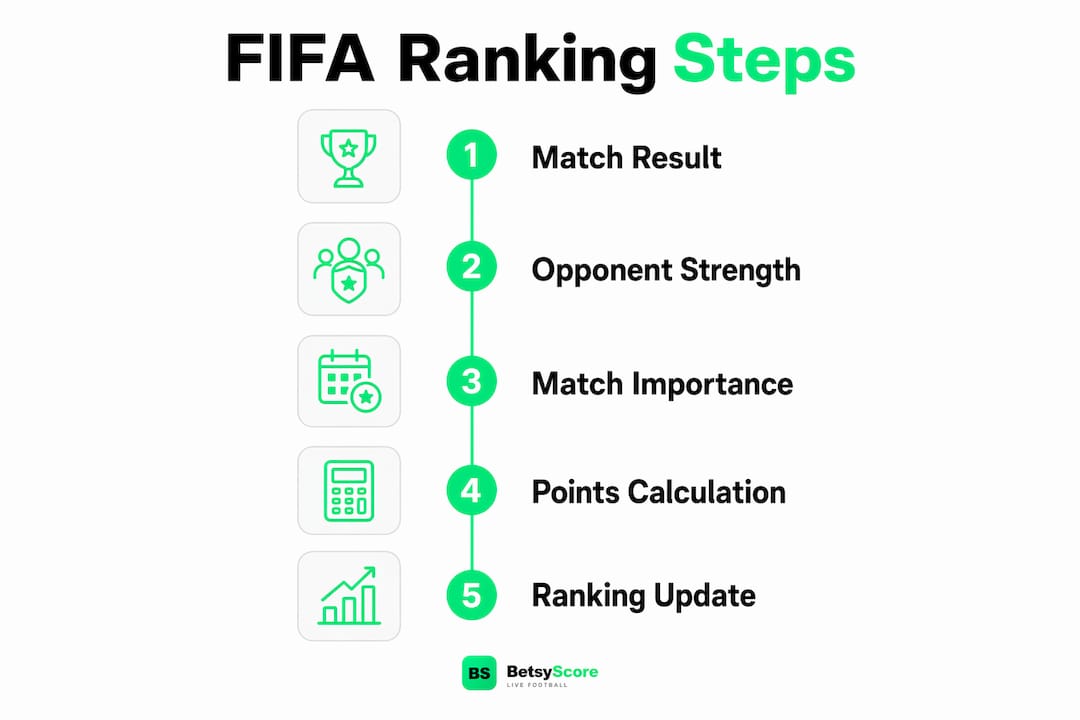
The FIFA ranking formula follows a straightforward structure: P = Pbefore + I × (W − We). Each variable carries real weight. W represents the match result (1 for a win, 0.5 for a draw, 0 for a loss). We is the expected result, calculated from the ranking gap between the two teams. I is the importance weighting assigned to the match type.
World Cup match importance is the highest of any competition in the formula. Group stage and Round of 16 matches carry an importance value of 50. Quarterfinals onward carry a value of 60. By comparison, friendly matches sit far lower on the scale. This gap explains why a single World Cup win moves rankings more than a string of friendly victories.

The expected result variable (We) is where the formula gets interesting. Ranking differences affect expected outcomes, reducing potential point gains for heavily favored teams and increasing them for underdogs. A top-five team beating a team ranked 80th gains fewer points than if the same top-five team beats the second-ranked nation. The formula rewards difficulty.
Here is how the core point values break down:
- Win: 1 point (before adjustment)
- Draw: 0.5 points (before adjustment)
- Loss: 0 points (before adjustment)
- Group stage importance (I): 50
- Knockout stage importance (I): 60
Pro Tip: When a lower-ranked team beats a higher-ranked opponent at the World Cup, the point gain is amplified by the expected result calculation. Analysts tracking ranking shifts should always check the pre-match ranking gap, not just the scoreline.
What special rules apply in World Cup knockout rounds?
Knockout round rules contain one protection that most fans do not know about. Teams eliminated in knockout rounds do not lose ranking points for the loss itself. Their points are frozen at the level they reached before that match. This rule prevents a team from being punished for reaching the later stages of the tournament.
Penalty shootout outcomes receive a specific treatment in the formula. A shootout loss counts as a draw in the ranking calculation, not a full loss. The losing team receives 0.5 points rather than 0. This distinction matters because it means a team that reaches the quarterfinals and loses on penalties still gains points from that match rather than losing ground.
Morocco’s ranking held at 6th in the 2026 World Cup despite Brazil’s exit from the tournament. The knockout protection rule meant Brazil’s elimination did not strip points already earned. Both teams retained the ranking gains accumulated through their earlier matches, regardless of when they were eliminated.
The practical effect of these rules is significant:
- Teams are incentivized to reach later rounds without fear of ranking collapse.
- Penalty shootout losers are treated more fairly than a standard loss would suggest.
- Rankings reflect tournament depth, not just final outcomes.
- Late-stage exits preserve a team’s global standing and seeding position for future draws.
How do ranking shifts affect World Cup seeding and team prestige?
FIFA rankings determine pot placement in the draw structure for subsequent World Cup cycles. The top nine ranked teams, along with the hosts, go into Pot 1. Pot 1 placement means a team avoids other elite nations in the group stage. The difference between Pot 1 and Pot 2 is the difference between a manageable group and a potential group of death.
France’s ranking movement during the 2026 tournament illustrates the stakes clearly. France moved to 1,925.86 points after a single knockout win, surpassing Argentina’s 1,925.15 points by less than one full point. That margin, earned in a single match, determined which team held the number one ranking heading into the quarterfinals.
The consequences of ranking shifts extend beyond tournament draws:
- Seeding in future draws: Higher-ranked teams enter Pot 1 and face statistically easier group opponents.
- Media and commercial value: Top-10 rankings attract broadcaster attention and sponsorship interest at the national federation level.
- Betting market influence: Rankings feed into pre-tournament odds, affecting how analysts and fans assess match probabilities.
- National prestige: Governments and football associations use ranking positions to measure program success and justify investment.
| Ranking outcome | Practical effect |
|---|---|
| Pot 1 placement | Avoids other elite teams in group stage draw |
| Top 10 ranking | Increased media coverage and commercial partnerships |
| Ranking rise post-upset | Improved seeding for continental qualifiers |
| Ranking drop after group exit | Risk of Pot 2 or lower in next cycle draw |
The role of rankings in tournament draws follows a similar logic across competitions. Pot placement shapes the entire competitive path a team faces, from the opening group match through to a potential final.
Pro Tip: Check the FIFA World Ranking on Betsyscore after each World Cup round. Rankings update in real time, so the pot placement picture for the next cycle shifts with every result.
Why do upsets affect elite and smaller teams differently?
The ranking system favors historical consistency. A team that has performed well across years of competitive matches holds a high baseline. A single upset win does not erase that gap quickly. Saudi Arabia’s 2022 upset win over Argentina generated significant points, but the overall ranking acceleration remained limited because Saudi Arabia’s baseline was far below Argentina’s accumulated total.
The 2026 World Cup expanded to 48 teams, bringing nations like Curaçao and Cabo Verde into the tournament for the first time. The expanded format creates divergent ranking effects for smaller nations versus established powers. Smaller nations gain more points per upset win due to the expected result calculation, but their total ranking points remain far below the elite tier. The gap closes slowly.
Key dynamics for smaller nations at the 2026 World Cup:
- Upset wins yield above-average points due to the expected result gap.
- Three group stage wins can produce a meaningful ranking jump of 10–20 places.
- Reaching the Round of 16 generates more points than any single friendly result.
- Historical consistency in the formula means elite teams absorb losses without catastrophic ranking drops.
The formula’s design reflects a deliberate choice. FIFA built the system to reward sustained performance, not single-tournament runs. This protects the integrity of the top 10 but slows the rise of nations that are genuinely improving. Analysts tracking long-term development should watch ranking trajectories over multiple World Cup cycles, not just single tournament results.
Key Takeaways
World Cup results drive FIFA ranking changes through a formula that weights match importance, opponent strength, and tournament stage, making every knockout match the highest-value ranking event in international football.
| Point | Details |
|---|---|
| Formula structure | Rankings use P = Pbefore + I × (W − We), with World Cup matches carrying the highest importance values. |
| Knockout protection | Teams eliminated in knockout rounds do not lose points, and shootout losses count as draws in the formula. |
| Seeding consequences | Ranking position determines pot placement in future draws, directly shaping group stage difficulty. |
| Elite vs. smaller nations | Upset wins yield amplified points for underdogs, but historical consistency keeps elite teams near the top. |
| Real-time updates | FIFA rankings shift after every match during the tournament, not in bulk at the end. |
Rankings tell part of the story, not all of it
Watching France reclaim the number one ranking by less than one point after a single match is genuinely striking. The formula is precise enough to capture that margin. But precision and completeness are different things.
The ranking system does not account for injuries, squad depth, or morale. FIFA rankings and betting markets diverge on exactly these factors. Betting odds adjust for a missing striker or a team playing its fourth match in twelve days. The ranking formula does not. Analysts who treat rankings as a complete picture of team strength will consistently misread certain matches.
The knockout protection rule is well-designed, but it creates an odd perception gap. A team can lose three straight knockout matches and still hold a top-10 ranking. Fans watching the tournament see a team struggling. The ranking table shows stability. Both readings are technically correct, which is why context always matters when interpreting post-tournament standings.
The 2026 expanded format adds another layer. More matches mean more ranking data points, which is good for accuracy over time. But it also means smaller nations accumulate more competitive results faster, which will gradually compress the gap between the top 50 and the next tier. That compression will take multiple cycles to show clearly in the standings.
My honest recommendation: use rankings as a baseline for seeding analysis and historical comparison. Use real-time match data, form guides, and AI-driven probability models for anything requiring a read on current team strength. The two tools answer different questions.
— Aria
Track rankings live with Betsyscore
Ranking shifts during the 2026 World Cup happen after every match. Betsyscore covers the tournament with live World Cup scores that refresh every few seconds, so fans and analysts can watch ranking implications unfold in real time.
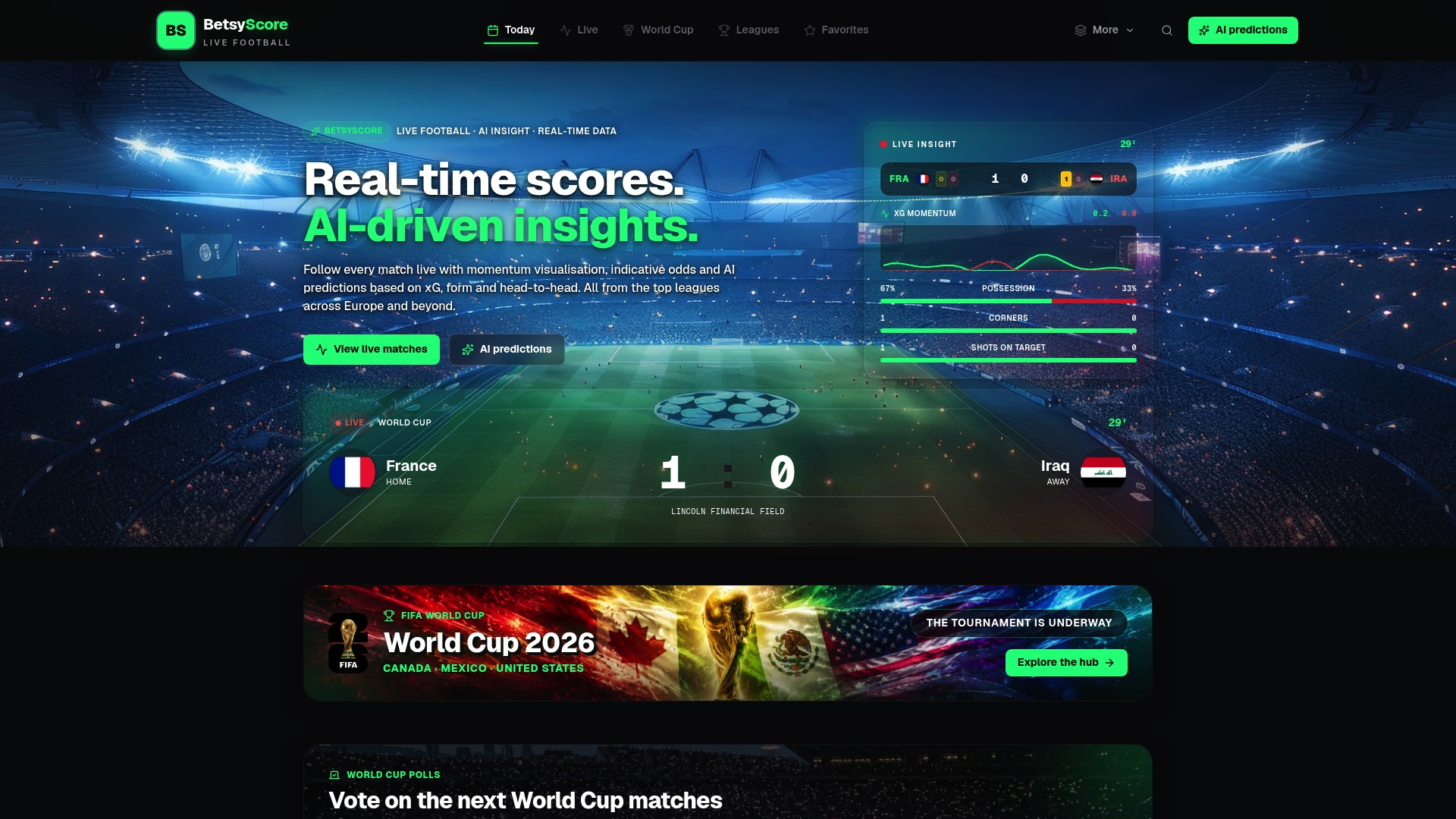
Betsyscore’s AI match predictions calculate win probabilities using expected goals, recent form, and head-to-head records. Those same factors feed into ranking point projections, giving analysts a data-backed view of how each match could shift global standings. The World Cup 2026 hub on Betsyscore brings together live lineups, tournament leaderboards, and instant stats across all 48 teams. Analysts tracking ranking implications will find everything they need in one place.
FAQ
How do World Cup results affect FIFA rankings?
FIFA rankings update after every World Cup match using a formula that factors in match outcome, the ranking gap between teams, and the importance weighting of the match. World Cup matches carry the highest importance values in the entire formula, making them the most significant ranking events in international football.
Do teams lose ranking points when eliminated at the World Cup?
Teams eliminated in knockout rounds do not lose ranking points for that loss. The knockout protection rule freezes their points at the level earned before the eliminating match, and penalty shootout losses count as draws rather than full losses.
What importance weighting do World Cup matches carry?
Group stage and Round of 16 matches carry an importance value of 50, while quarterfinals onward carry a value of 60. These are the highest importance values in the FIFA ranking formula, significantly above qualifiers or friendly matches.
Why do smaller nations rise slowly in rankings despite World Cup upsets?
The formula rewards historical consistency, so a team with a low baseline needs sustained competitive results across multiple cycles to close the gap with elite nations. A single upset win generates above-average points due to the expected result calculation, but the total points gap remains large.
How quickly do FIFA rankings update during the World Cup?
FIFA rankings update in real time during tournaments, with standings shifting after each match rather than in a bulk update at the end of the tournament.