Why Football Match Previews Matter for Every Fan
Football match previews are defined as structured pre-match briefings that consolidate verified team news, tactical context, injury updates, and market signals into a single, decision-ready format. They are not score predictions. They are the most efficient tool fans and bettors have for converting raw curiosity into informed anticipation before kickoff. Search traffic for previews spikes sharply in the 24 to 72 hours before a match, which confirms that fans treat this window as their primary research period. Understanding why football match previews matter starts with recognizing that they function as decision-support tools, not crystal balls.
Why football match previews matter for matchday viewing
Match previews frame the tactical narratives and emotional stakes of a fixture before a single ball is kicked. Without that context, a 0-0 draw between two mid-table sides looks dull. With it, you understand that one team is playing a high defensive line against a striker returning from injury, and suddenly every clearance carries weight. High-quality previews act as narrative devices that transform fixtures into emotionally compelling events, boosting fan loyalty and engagement.
The pre-match analysis significance goes beyond entertainment. Previews set expectations, which shapes how you interpret events during the match. If you know a team favors a 4-3-3 press but is missing its first-choice defensive midfielder, you will read their defensive shape differently from the first minute. That awareness deepens your viewing experience in a way that no post-match recap can replicate.
Previews also increase social interaction around fixtures. Fans who read structured pre-match content arrive at the match with talking points, tactical questions, and informed opinions. That translates directly into more active engagement on social platforms, in group chats, and at the stadium. The impact of match previews on fan culture is measurable and consistent across competitions from the Premier League to the Champions League.
Pro Tip: Read a match preview as a tactical briefing, not a forecast. Your goal is to understand the conditions of the game, not to predict the final score. That shift in mindset reduces frustration and increases how much you actually learn from each match.
What makes a football match preview authoritative?
The quality of a preview depends entirely on the accuracy and completeness of its components. A preview built on unverified rumors is worse than no preview at all. It creates false confidence and leads to poor decisions, whether you are picking a fantasy lineup or placing a bet.
The five components that define a reliable preview are:
- Confirmed kickoff time and venue — Scheduling errors are more common than fans realize, especially in rescheduled fixtures or cup competitions. Always verify the time zone.
- Verified starting lineups or expected formations — Official lineups typically release 60 minutes before kickoff. Previews published earlier should clearly label lineup information as projected.
- Injury and suspension updates — Player availability is the single variable that most affects match dynamics. A confirmed absence of a key striker or holding midfielder changes the entire tactical picture.
- Formation and tactical analysis — Understanding how two formations match up reveals likely areas of contest. A 4-2-3-1 against a 3-4-3 creates specific wide overloads worth watching.
- Broadcast and streaming availability — Legal access information prevents fans from missing kickoff while searching for a stream.
Advanced metrics like expected goals (xG) boost tactical expectation accuracy by 30–40% when integrated into match analysis. That improvement matters because xG accounts for shot quality, not just shot volume, giving fans a more honest picture of which team is likely to create genuine scoring chances.
| Preview Component | Why It Matters |
|---|---|
| Kickoff time and venue | Prevents scheduling errors and missed matches |
| Verified lineups | Reveals actual tactical shape, not assumed formations |
| Injury and suspension status | Single biggest variable affecting match dynamics |
| Formation analysis | Identifies likely areas of tactical contest |
| xG and performance metrics | Provides evidence-based context beyond raw statistics |
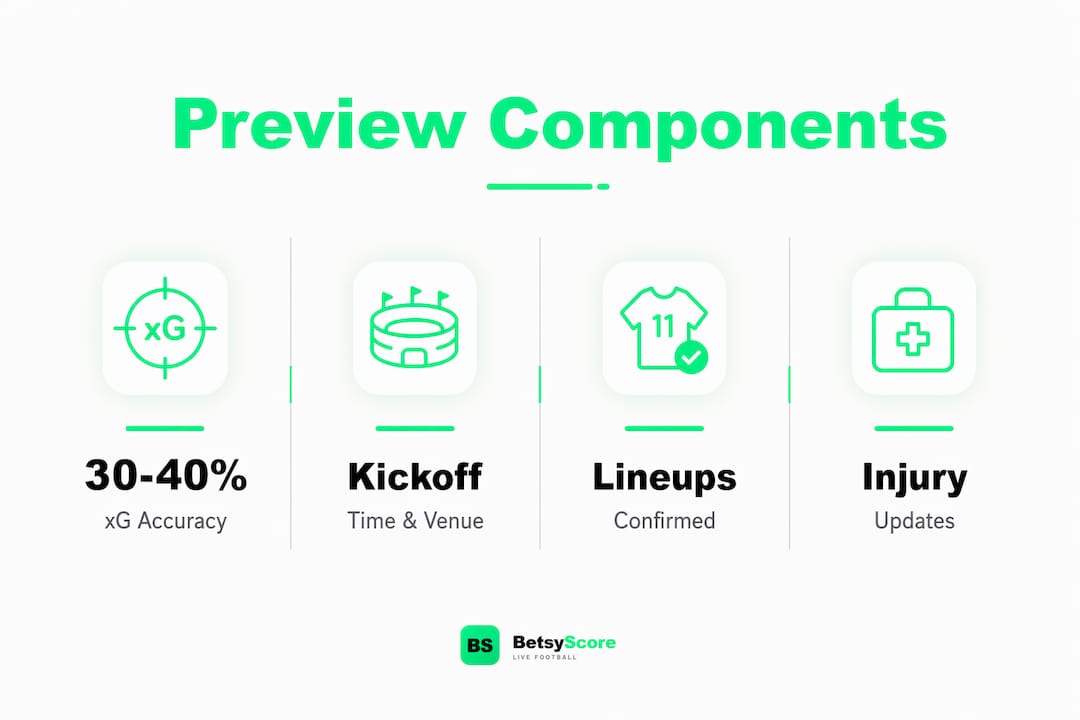
Pro Tip: Apply a five-point verification checklist to every preview you read: kickoff time, confirmed lineups, injury updates, formation analysis, and broadcast availability. This checklist reduces analysis paralysis and keeps your preparation focused.
How previews influence betting and fantasy football decisions
The benefits of football analysis are most visible in betting and fantasy football, where decisions carry direct consequences. Fans who rely on structured previews reduce their pre-match research time by 60–90% compared to searching fragmented sources. That time saving is not trivial. It means less exposure to unverified social media noise and more time spent on actual decision-making.
For bettors, the football match insights value lies in how previews consolidate data that would otherwise require hours to gather. Injury confirmations, head-to-head records, recent form across all competitions, and home or away performance splits all feed into a single pre-match picture. When that picture changes, such as when a key player is ruled out two hours before kickoff, the odds market reacts. Experienced bettors watch for market movement after team news announcements to detect what analysts call “sharp money,” which signals that informed parties have already acted on the new information.
The key behaviors that separate informed bettors from emotional ones include:
- Cross-referencing multiple official sources before accepting any lineup or injury update as confirmed
- Tracking odds movement in the hour after team news drops, not just at the time of the original preview
- Separating market sentiment from match probability — odds reflect betting volume, not certainty
- Using xG-based previews to identify fixtures where the market may be overvaluing recent results over underlying performance
Fantasy football decisions follow the same logic. A player listed as a “possible doubt” in a preview carries a different risk profile than one confirmed as “out.” Acting on unverified reports of a player’s return from injury is one of the most common and costly fantasy mistakes.
“Previews should be consumed as tactical and situational briefings rather than final result predictions. The fan who understands game conditions before kickoff makes smarter decisions during and after the match, regardless of the final score.” Pre-match predictions: building an evidence-based forecast
Common mistakes fans make when reading match previews
The most damaging mistake fans make is treating a single preview source as definitive. Over-reliance on one source or rumor-driven updates leads directly to misinformation and poor decisions. Official club channels, league websites, and verified journalist reports should always be cross-referenced before acting on any lineup or injury claim.
The second most common error is misreading odds as probability. Odds reflect the betting market’s collective position, which is shaped by volume and bookmaker margins, not by a neutral assessment of match likelihood. A team priced as a heavy favorite may be overvalued because of public sentiment following a high-profile win, not because the underlying data supports that price.
The following mistakes appear consistently among fans who use previews poorly:
- Accepting “likely starter” as confirmed — Projected lineups change. Only treat a lineup as confirmed after the official team sheet releases.
- Ignoring the difference between “confirmed out” and “possible doubt” — These two statuses carry very different implications for team selection and betting value.
- Skipping formation analysis — Knowing a team’s expected shape is as important as knowing who plays in it.
- Using previews published more than 48 hours before kickoff — Injury status and tactical decisions evolve. Previews older than two days carry meaningful information risk.
Pro Tip: Always distinguish between “confirmed out” and “possible doubt” in injury reports. A player listed as a doubt may still start, which changes the tactical picture entirely. Structured previews that use clear status labels reduce this confusion significantly.
Key Takeaways
Football match previews are the most efficient tool fans have for converting pre-match curiosity into informed, evidence-based decisions before kickoff.
| Point | Details |
|---|---|
| Previews are briefings, not predictions | Treat pre-match analysis as situational context, not a forecast of the final score. |
| Five-point checklist prevents errors | Verify kickoff time, lineups, injuries, formations, and broadcast info before every match. |
| Research time drops significantly | Centralized previews cut pre-match research time by 60–90% versus fragmented searching. |
| xG improves tactical accuracy | Expected goals metrics boost tactical expectation accuracy by 30–40% in match analysis. |
| Odds reflect sentiment, not certainty | Market movement after team news reveals more than the opening price ever does. |
What consistent preview reading has taught me
The fans who get the most out of match previews are not the ones who read the most. They are the ones who read with a clear framework. After years of following football across the Premier League, La Liga, and Champions League, the single biggest shift in my own matchday experience came when I stopped looking for a predicted score and started looking for the conditions of the game.
A preview that tells you a team’s first-choice defensive midfielder is out, their opponents press high, and the referee averages over four yellow cards per game gives you three separate lenses through which to watch the match. None of those facts tell you who wins. All of them make the match more interesting to watch and easier to analyze afterward.
The emotional bias problem is real and underappreciated. Fans who skip structured previews and rely on social media tend to arrive at matches with inflated expectations or unfounded fears. Structured previews help fans differentiate genuine tactical trends from noisy social media speculation. That separation is the foundation of smarter fandom.
My practical advice is to build a repeatable habit. Read your preview in the 24 hours before kickoff, apply the five-point checklist, and note two or three tactical questions you want answered during the match. That process takes under ten minutes and pays off across every fixture you watch. The AI predictions at Betsyscore follow exactly this kind of structured, data-first approach, which is why I find them genuinely useful as a complement to traditional preview reading.
— Aria
Betsyscore gives you the full pre-match picture
Fans who want verified, data-driven previews without the research burden have a direct solution in Betsyscore.
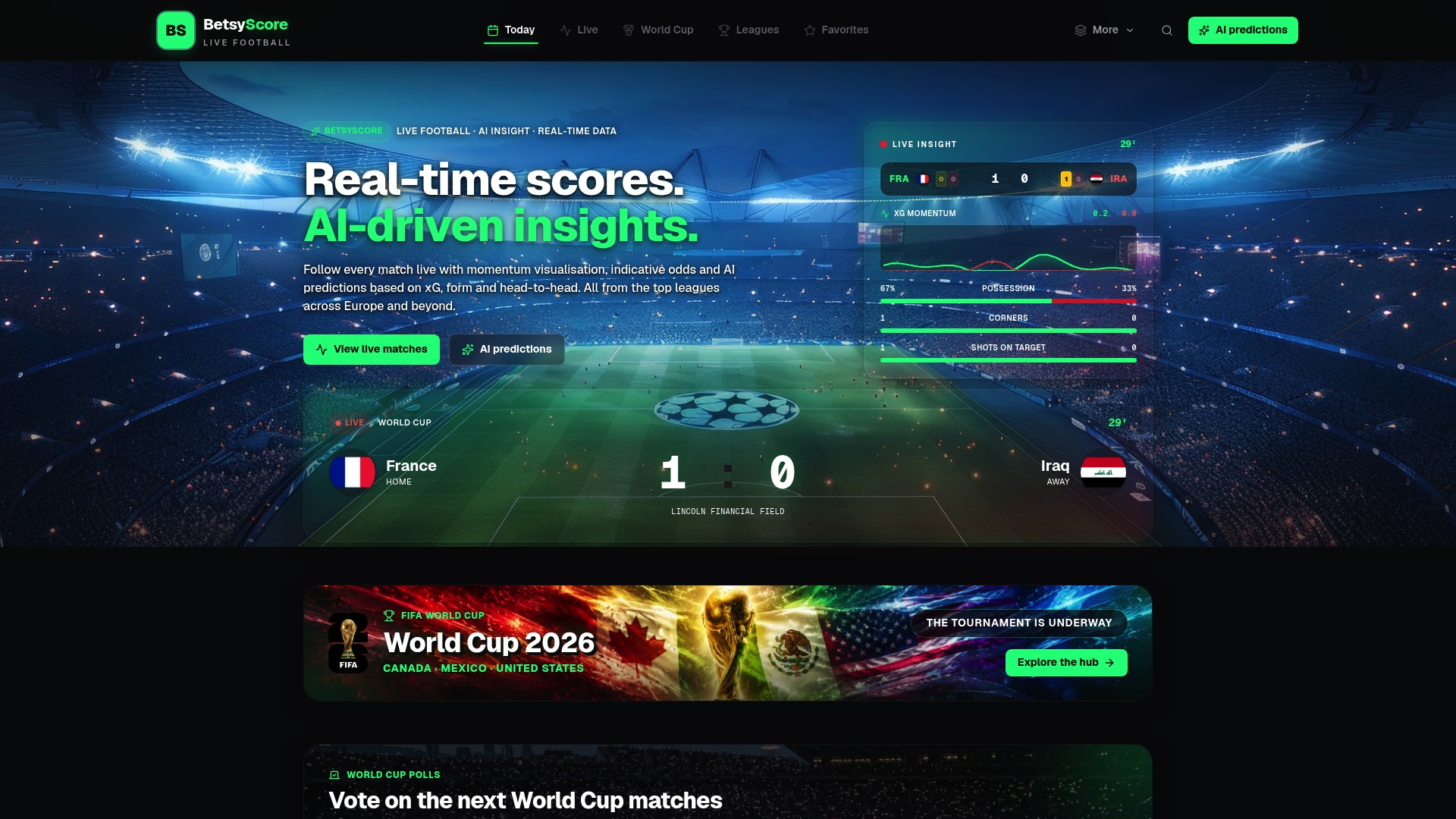
Betsyscore delivers live football scores that refresh every few seconds alongside AI-powered win-probability predictions built from expected goals, recent form, and head-to-head records. Coverage spans the FIFA World Cup 2026, the Premier League, La Liga, the Bundesliga, Serie A, the Champions League, and more than 200 competitions worldwide. Live lineups, injury updates, player profiles, and match highlights are all available in one place. For fans who want the full pre-match picture without spending an hour piecing it together, Betsyscore is the data-first home for football before, during, and after every match.
FAQ
Why do football match previews matter for casual fans?
Match previews provide the tactical and situational context that makes any fixture more engaging to watch. Fans who read previews understand what to look for during the match, which deepens their viewing experience regardless of the final score.
How far in advance should I read a match preview?
The optimal window is 24 to 72 hours before kickoff. Search traffic for previews peaks in this period, and injury or lineup information is recent enough to be reliable without being too early to reflect late changes.
How do previews help with betting decisions?
Previews consolidate injury news, form data, and tactical context that would otherwise take hours to gather. Watching odds movement after team news drops is one of the most effective ways experienced bettors identify value.
What is the difference between a prediction and a preview?
A prediction states an expected outcome. A preview provides the conditions, context, and data that inform your own assessment. The most useful previews function as briefings, not forecasts.
Can match previews improve fantasy football picks?
Yes. Previews that clearly distinguish between “confirmed out” and “possible doubt” statuses give fantasy managers the accurate player availability information needed to make lineup decisions with confidence rather than guesswork.